For months, you have been searching for a skilled professional for a key position. The job posting is live on three platforms, a headhunter has been brought in, and still the only applications you receive are the wrong fit. At the same time, your best employee has not mentioned a word about already being in talks with a competitor.
We regularly encounter situations like these at K&R Advertising in conversations with managing directors and HR decision-makers. The common denominator is this: the problem is not a lack of recruiting budget. It is the lack of an employer brand that attracts, retains, and convinces.
That is exactly where employer branding comes in. In this guide, you will learn what employer branding actually means, why it has become indispensable for mid-sized companies, and how to build an employer brand step by step that gives you a real competitive advantage.
This article is aimed at managing directors, HR leaders, and marketing decision-makers in mid-sized companies who want to attract qualified professionals and retain them over the long term. It is especially relevant for you if open positions are difficult to fill, employee turnover is too high, or your company does not yet have the visibility it deserves as an employer.
Employer branding refers to the strategic process through which a company defines, develops, and communicates its identity as an employer, both internally and externally. The goal is to be perceived as an attractive employer in order to attract qualified talent and retain existing employees over the long term.
Contrary to what many people think, this is not about colorful images on Instagram or a foosball table in the break room. Employer branding is a holistic approach that reaches deep into company culture, values, and the actual working environment. It is the honest answer to the question: why should a talented person work for us and not for a competitor?
In this context, two dimensions can be distinguished. Internal employer branding is aimed at the existing workforce. It includes everything that helps employees identify with the company, stay engaged in their work, and become genuine brand ambassadors. External employer branding, on the other hand, is aimed at the job market. It makes the company visible to potential applicants and positions it as an employer of choice.
What many business owners underestimate is this: every unfilled position costs real money. The German Economic Institute estimates the economic damage caused by the shortage of skilled workers at 49 billion euros per year. For individual companies, this means rising recruiting costs, additional strain on existing teams, and missed business opportunities.
At the same time, the labor market has fundamentally changed. We are long since operating in a candidate-driven market. It is no longer companies choosing applicants, but skilled professionals choosing their employer. And what do they base that decision on? In addition to salary and job security, it is above all company culture, development opportunities, and an authentic employer brand that make the difference.
For mid-sized companies, this has a clear consequence. If you want to compete for talent against corporations with large HR budgets, you do not need a huge number of job ads. You need an employer brand that builds trust before the first interview even takes place.
You may be asking yourself: is the investment in employer branding really worth it? The answer can be proven through measurable results.
First, your recruiting costs decrease significantly. According to LinkedIn, companies with a strong employer brand record up to 50 percent lower cost per hire. If you are currently spending 6,000 to 10,000 euros per hire, as the German average suggests, the savings potential is enormous.
Second, the quality of applications improves. According to LinkedIn, strong employer brands attract 50 percent more qualified applicants. This means not only more choice, but also better-matched candidates who are deliberately choosing your company.
Third, the entire hiring process becomes faster. Companies with a positive employer image fill positions one to two times faster. With an average time to hire of 165 days in Germany, this is a decisive advantage.
Fourth, turnover decreases. A Glassdoor study shows that new hires at companies with a strong employer brand are 40 percent less likely to leave within the first six months. In the long term, employee turnover decreases by an average of 28 percent.
Fifth, employer branding strengthens the commitment of your existing employees. People who are proud of their employer identify more strongly with the company, are more productive, and become natural ambassadors for your brand.
Sixth, you improve your position in salary negotiations. According to LinkedIn, companies with a strong employer brand do not need to pay a salary premium of 10 percent or more in order to convince candidates. That saves real money with every hire.
Seventh, a strong employer brand has a positive effect on your entire corporate brand. Satisfied employees who speak positively about their employer also strengthen the trust of customers and business partners.
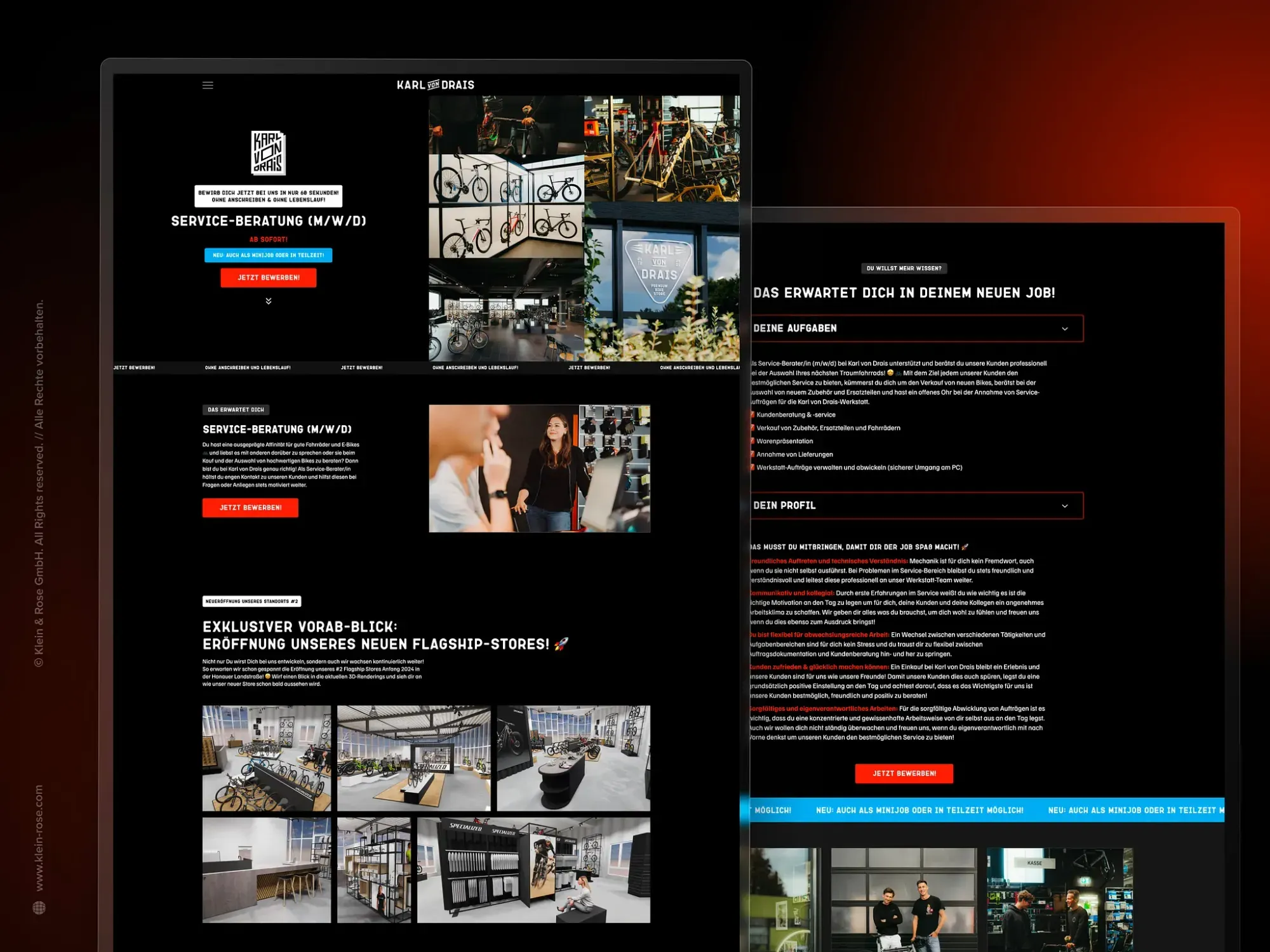
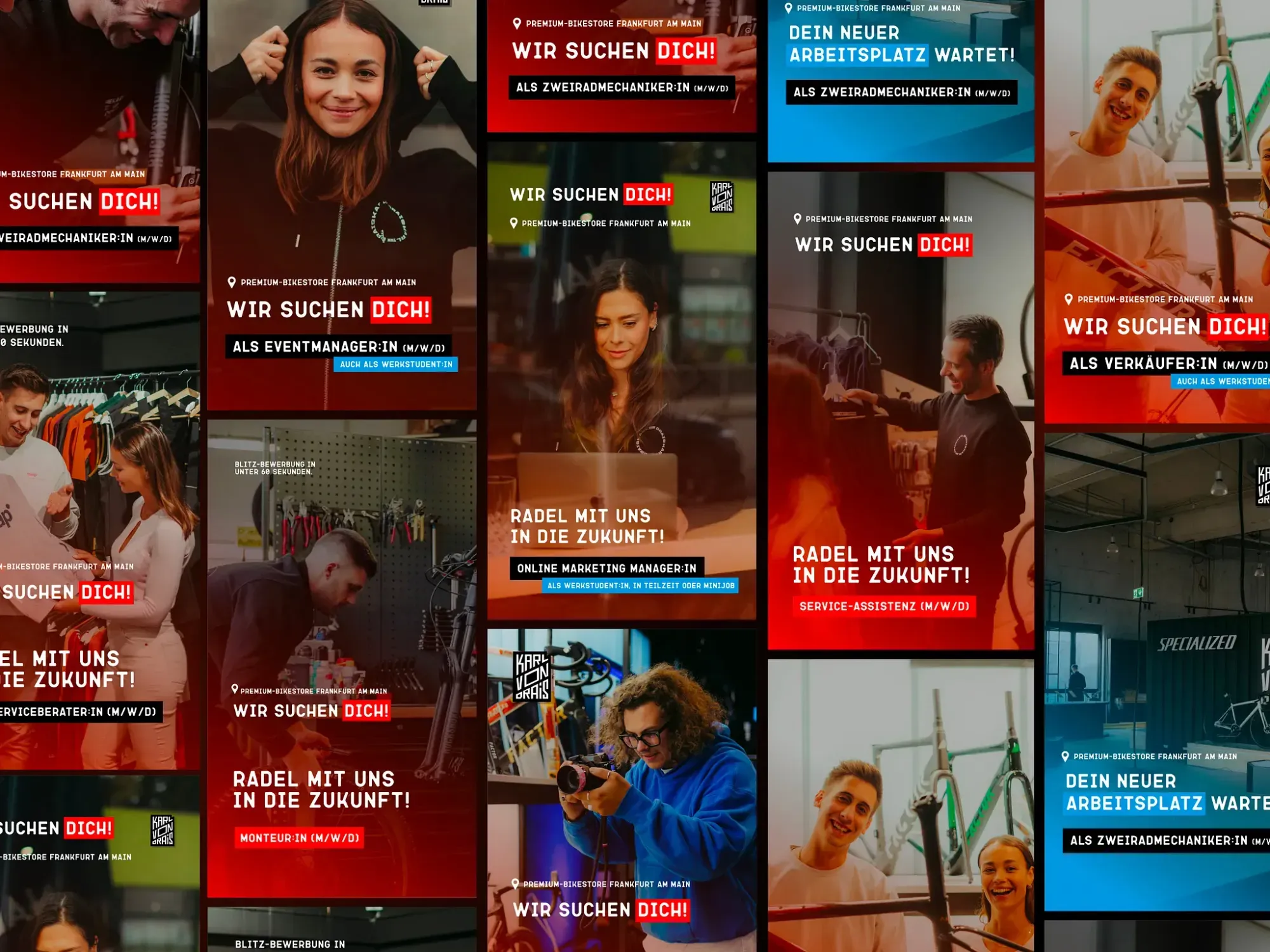
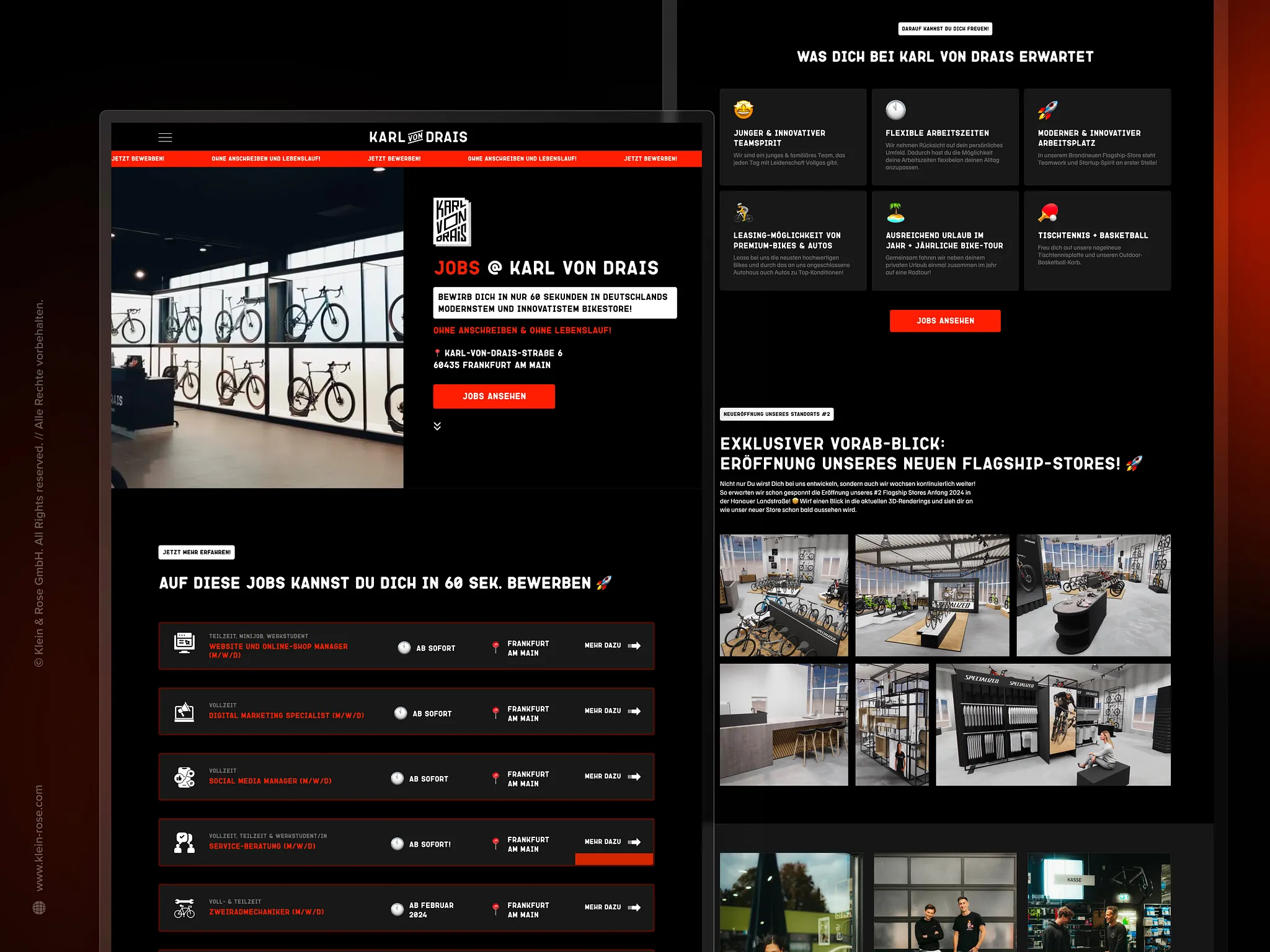
An example from our work shows how concrete this effect can be: for Karl von Drais, we developed a careers portal, an image film, and social recruiting measures. The result: more than 100 new employees hired. A figure that would not have been achievable without a well-thought-out employer branding strategy.
The two terms are often used synonymously, but they describe fundamentally different things. Employer branding is the strategic foundation: it defines what you stand for as an employer, what makes you unique, and what promise you make to your employees. Personnel marketing is the operational implementation: it uses the employer brand to fill specific positions and create recruiting campaigns.
Imagine the difference as you would with a building. Employer branding is the foundation and the architecture. Personnel marketing is the furnishing and decoration. Without a solid foundation, even the most beautiful interior is of no use.
Employer branding has a long-term effect and is aimed at the entire organization. It influences company culture, internal communication, and the employee experience. Personnel marketing, on the other hand, is campaign-driven, time-limited, and focused on specific vacancies. Only when the two work together does sustainable impact emerge.
In our work with companies from a wide range of industries, we repeatedly see the same thing: anyone who invests only in personnel marketing without first working on their employer brand is wasting budget. The job ad may look good, but if applicants experience a different picture on your website, on Kununu, or during the interview, they will drop out.
An effective employer branding strategy consists of several elements that must work together. At the center is the so-called Employer Value Proposition, or EVP for short.
The EVP is the central promise you make as an employer. It answers the question: what makes us unique as an employer, and why should someone work for us? A good EVP is not invented, but honest. It is based on the actual culture, the real strengths, and the genuine day-to-day work experience within your company.
To formulate your EVP, talk to your own employees. Ask them: what do you value about your employer? What would you tell a friend if they were considering applying here? The answers are worth gold, because they show what truly makes your employer brand authentic.
Not every skilled professional is the same. An IT developer has different expectations of an employer than a caregiver or a sales manager. Define exactly which target groups you want to address, and understand their needs, media habits, and decision-making criteria.
The more precisely you know your target audience, the more specifically you can communicate. A generic “We are a great company” convinces no one. A specific message such as “With us, you will work with state-of-the-art technology in an 8-person team that manages projects independently” is far more persuasive.
The employer brand becomes tangible at every touchpoint, or it does not. From the careers page to the application form to the onboarding process, every interaction with your company shapes the image that applicants and employees form of you.
Briefly explained: touchpoints in employer branding are all points of contact where potential or existing employees interact with your company. These include your careers website, social media channels, application portals, employer review platforms such as Kununu or Glassdoor, interviews, onboarding, and the entire day-to-day work experience.
One of the biggest mistakes is to think of employer branding only externally. If you promise flexibility and team spirit externally, but internally there are rigid hierarchies and mistrust, it will become obvious no later than onboarding. The result: new employees leave again quickly, and critical reviews begin to accumulate on rating platforms.
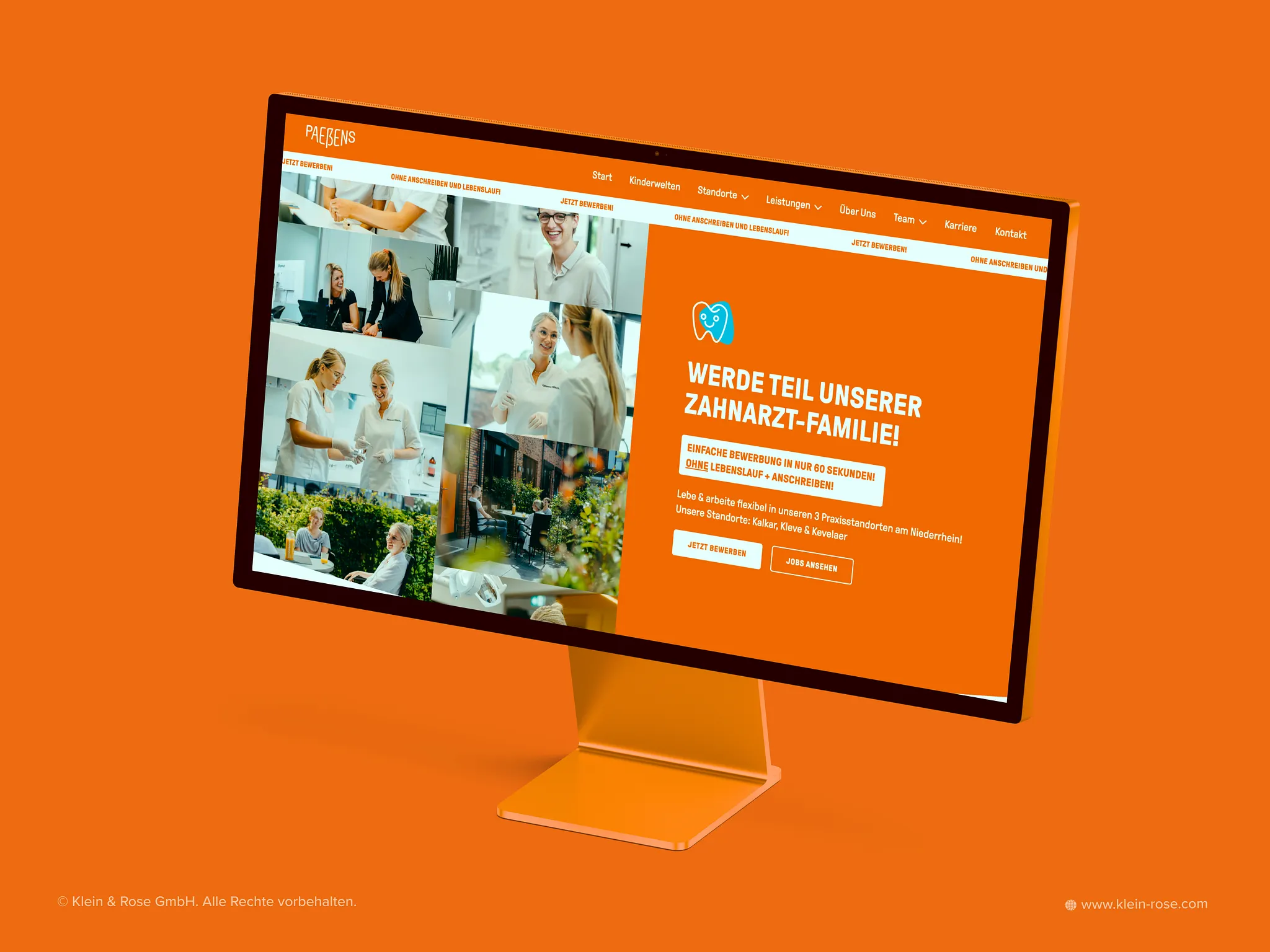
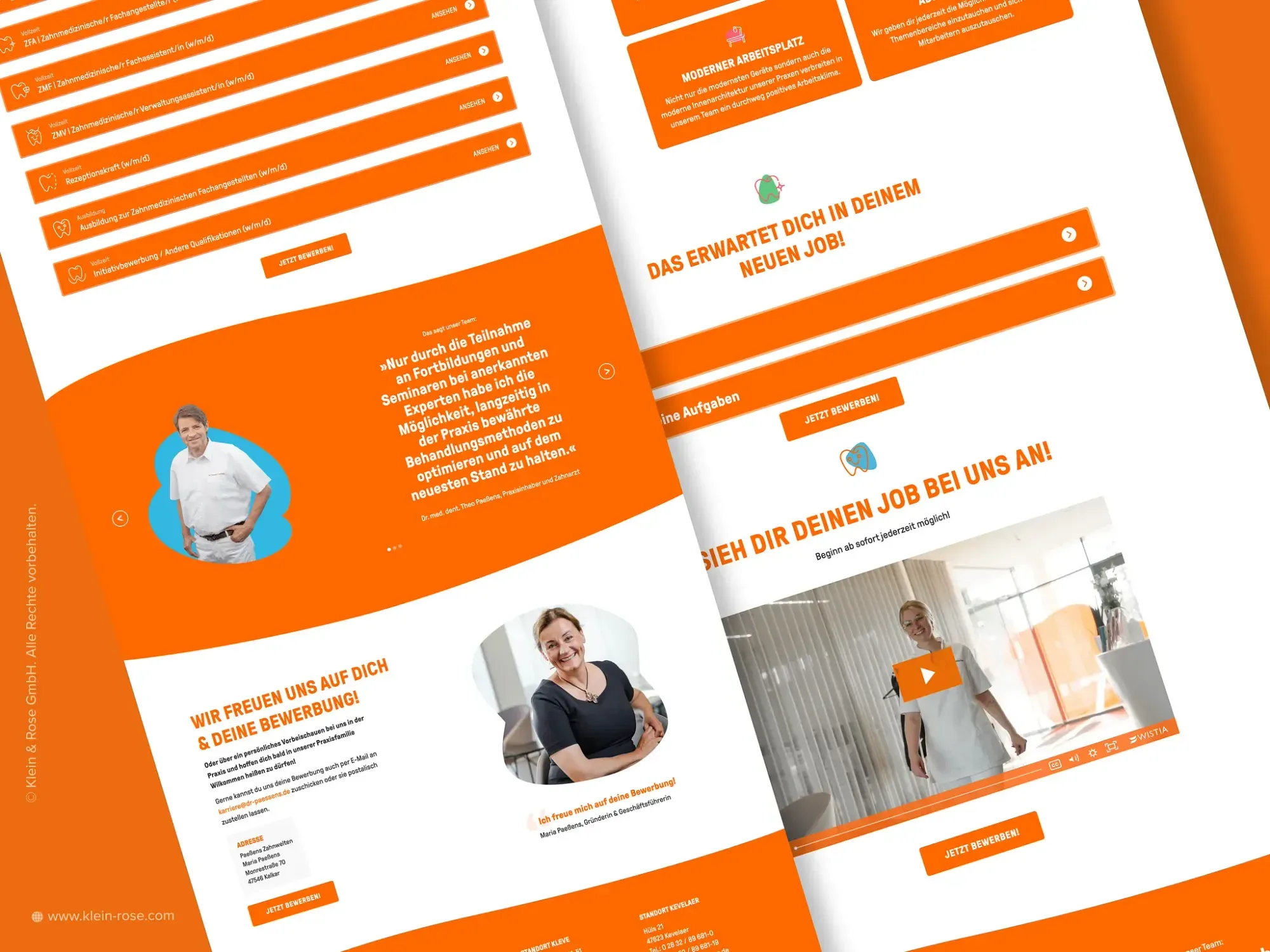
One example that shows how internal and external employer branding can work together: for Paeßens Zahnwelten, a dental practice with three locations and more than 150 employees, we developed a careers portal with a mobile funnel system and authentic employee interviews. In an industry that is particularly affected by the shortage of skilled workers, this made it possible to attract qualified applicants by making the real working culture visible and tangible.
The good news: you do not have to implement everything at once. Employer branding is a process that can be built up step by step. The following six steps provide clear guidance.
Analyze the status quo: before you change anything, you need clarity about the current situation. How are you currently perceived as an employer? Review your ratings on Kununu and Glassdoor, conduct employee surveys, and analyze your recruiting metrics such as time to hire, cost per hire, and turnover rate.
Formulate your EVP: based on the analysis, define your employer promise. What makes you unique? What can you promise authentically? The EVP should summarize in just a few sentences why your company is a great employer.
Optimize your careers page: your website is often the first deeper point of contact for applicants. A professional careers page with real insights into everyday work, employee testimonials, and a smooth application process is the foundation of your external employer branding.
Develop a content strategy: regularly create content that makes your employer brand visible. This can include employee interviews, behind-the-scenes videos, team introductions, or blog articles about your company culture. Authenticity always beats polished perfection.
Use the right channels: choose the channels where your target audience is active. For many mid-sized companies, LinkedIn, Instagram, and their own careers page are the most important platforms. According to the Index Recruiting Report 2024, more than half of HR decision-makers consider social media recruiting the most important trend in talent acquisition.
Measure and optimize: employer branding without measuring success is like sailing without a compass. Define KPIs from the start and regularly check whether your measures are working. More on this in the section on the most important metrics.
Across more than 60 branding projects for companies from a wide range of industries, we have repeatedly seen certain patterns. Here are the mistakes you should definitely avoid.
The most serious mistake is a lack of authenticity. If your employer brand paints a picture that has little to do with the reality inside the company, applicants will notice it no later than the interview or during their first weeks on the job. The result is high early turnover and negative reviews on employer platforms that can damage your reputation in the long term.
Many companies focus exclusively on external employer branding and forget their own employees. Yet satisfied employees are the most credible ambassadors of your employer brand. Invest first in the internal experience before communicating externally.
Another common mistake: employer branding is understood as a one-time campaign rather than an ongoing process. An employer brand is not created through one photo shoot and three LinkedIn posts. It must be maintained continuously, developed further, and adapted to changing market conditions.
It is also striking how few companies measure their employer branding efforts. Finally, many companies underestimate the influence of the candidate experience. Every touchpoint matters. A complicated application form, a delayed response, or a poorly prepared interview can be enough to lose an ideal candidate.
What you do not measure, you cannot manage. Do you want to find out how your company can be perceived more strongly as an employer? Let us take a look together at where your greatest opportunities lie. We look forward to the conversation with you.
For a data-based employer branding strategy, the following metrics are crucial.
Cost per hire shows how much you spend per hire. In Germany, the average lies between 4,700 and 10,000 euros. A strong employer brand can reduce this figure by up to 50 percent. It is calculated by dividing all internal and external recruiting costs by the number of hires.
Time to hire measures the time from publishing a vacancy to signing the contract. Every day that a position remains unfilled costs your company productivity and revenue. An unfilled skilled position can cost more than 15,000 euros over 90 days, assuming an annual salary of 50,000 euros.
The turnover rate shows how many employees leave your company. Depending on the position, the cost of an employee leaving ranges between 90 and 200 percent of annual salary when recruitment, onboarding, and lost productivity are taken into account.
The offer acceptance rate reveals how many candidates actually accept a job offer. A low rate indicates a weak employer image.
The Employee Net Promoter Score, or eNPS, measures whether your employees would recommend you as an employer. It is based on one simple question: “On a scale from 0 to 10, how likely are you to recommend us as an employer?” A high eNPS is a strong signal of a healthy employer brand.
In addition, you should monitor your ratings on platforms such as Kununu and Glassdoor and evaluate the quality of applications, meaning quality of hire, based on the performance and retention of new employees after 6 to 12 months.
For calculating the ROI of your employer branding investment, a simple formula applies: compare the recruiting costs saved plus the reduced turnover costs against the total investment. According to Universum, companies that proceed in a structured way achieve returns of up to 3.3 times their investment.
The shortage of skilled workers will not disappear on its own. It will continue to intensify due to demographic change. Companies that invest in a strong employer brand today are not only securing access to the best talent, but also saving significant long-term costs in recruiting and employee retention.
Employer branding is not a project with a beginning and an end. It is a mindset that runs through the entire company: from the way you formulate your job ads, to the working environment you create, to the way you communicate with your employees.
What we have experienced at K&R across numerous projects is this: the greatest leverage often does not lie in large budgets, but in the willingness to look inward honestly, define your identity as an employer clearly, and then make it visible consistently. Whether through a professional careers portal, authentic video insights, or a well-thought-out social media presence.
Would you like to find out how your company can be perceived more strongly as an employer? Let us take a look together at where your greatest leverage lies. We look forward to the exchange with you.
Book your appointment now, free of charge and without obligation.