Your company delivers strong performance, has a committed team, and satisfied customers. But when someone visits your website, opens your LinkedIn profile, or flips through your brochure, they do not see any of that at first. They see images. And those images determine within just a few moments whether trust is built or whether the visitor moves on.
That is exactly where business photography for companies comes in. Professional business photos are not decorative extras. They are a strategic tool that makes your brand tangible, communicates trust, and reinforces your message before a single word has even been read.
In this guide, you will learn which types of corporate photography exist, why professional images have a measurable impact on your business success, and how to get photos step by step that truly work for you. No theory, but practical insight from more than 60 branding projects.
This article is aimed at managing directors, marketing decision-makers, and other leaders in mid-sized companies who want to professionalize their visual external presence. Are you planning a new brand presence, a website, or a careers portal and wondering what role photography plays in it? Do you feel that stock photos do not do justice to your brand, but are not quite sure where to start? Then you are in the right place.
Business photography refers to the professional creation of images in a business context. It includes all photographic services a company uses to visually present its brand, its employees, its products, or its events. This includes portraits of the management team, team photos, event photography, brand shoot images for the website, and much more.
The difference from private photography or stock images is fundamental. Private photos are taken without a strategic purpose. Stock images are generic and interchangeable. Professional business photography, by contrast, is aligned with a company’s brand identity, communicates a message deliberately, and creates recognition.
Why is this so important for companies? Because visual impressions are the fastest and most emotional form of communication. When a potential customer opens your website, their brain decides within milliseconds whether the company feels professional, trustworthy, and relevant. And that judgment is based almost entirely on what they see, not on what they read.
In our work with companies from industries such as real estate, consulting, and tax advisory, we see the same thing again and again: companies invest in branding, web design, and copy, but photography is treated as the final step or left out entirely. The result is websites with strong design and weak images. The impact falls flat. It is like wearing a tailored suit with worn-out sneakers. Every detail matters.
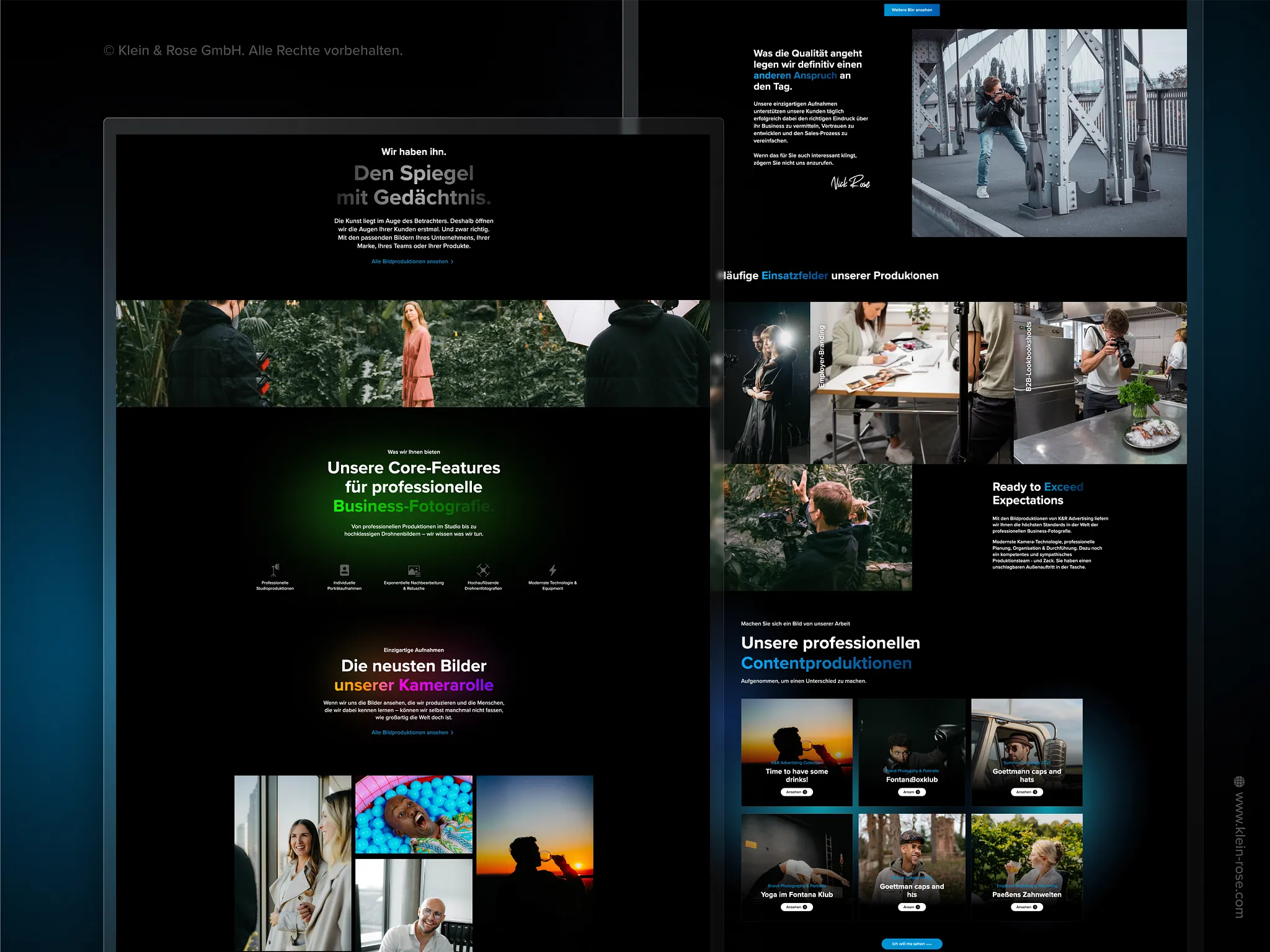
When people talk about business photos, many first think of the classic portrait against a white background. In reality, the range of corporate photography is much broader. Which format makes sense for your company depends on where and for what purpose you want to use the images.
Portraits and headshots are the foundation. They show individual people, usually the management team or executives, in a professional yet approachable way. Good business portraits communicate competence and personality at the same time. They are used on websites, in LinkedIn profiles, in press materials, and on business cards.
Team photos go one step further. They do not just show faces, but company culture. An authentic team photo communicates cohesion, energy, and personality. This is particularly relevant for companies that want to position themselves in the competition for skilled talent. Applicants look at the team page before submitting an application.
Brand shoot images are perhaps the most underestimated format. These are lifestyle images that show your company in action: meeting situations, work at the desk, customer interaction, creative processes. These images are worth gold for your website homepage, social media channels, and marketing materials because they tell real stories instead of showing staged scenes.
Event photography documents company celebrations, trade fairs, conferences, or internal events. It provides content for social media, internal communication, and follow-up reporting. And it shows externally that things are happening in your company. You can find more about the different occasions and when each format makes sense in our article Event Photography, Team Photos & More: When Companies Need Which Type of Business Photography.
Product and architectural photography, finally, is aimed at companies that want to present physical products or spaces in the best possible light. From real estate to technical components, professional images make the difference between “looks okay” and “I want that.”
Briefly explained: a brand shoot is a planned photoshoot that creates images telling your brand visually. Unlike classic portraits, the focus here is on situations, moods, and authentic moments that fit your brand identity. It connects photography with strategy.
You may be asking yourself: is the investment in professional business photography really worth it? The short answer is yes. The more detailed answer becomes clear through the concrete advantages that we repeatedly observe in our projects.
The most important advantage is trust. People buy with their eyes. Before a prospect reviews your offer, reads your references, or compares your price, they have already formed an impression. And that impression is based on the overall visual presence. Professional photos signal: this is a company that takes its own standards seriously. Companies that cut corners in how they present themselves unconsciously raise the question of where else they may be cutting corners.
The second advantage is differentiation. In many industries, the promises of what is offered are very similar. What a tax advisor, an IT service provider, or a real estate broker offers often differs only in nuances. The visual presence, on the other hand, can make the decisive difference. Companies with a professional, consistent visual language stand out, while competitors using stock photos disappear into the crowd.
Third, good business photos create approachability. Especially in B2B, where business relationships are often long-term and based on trust, customers want to know who they are dealing with. Real photos of real people build a connection before the first conversation even takes place. That significantly reduces friction points in the sales process.
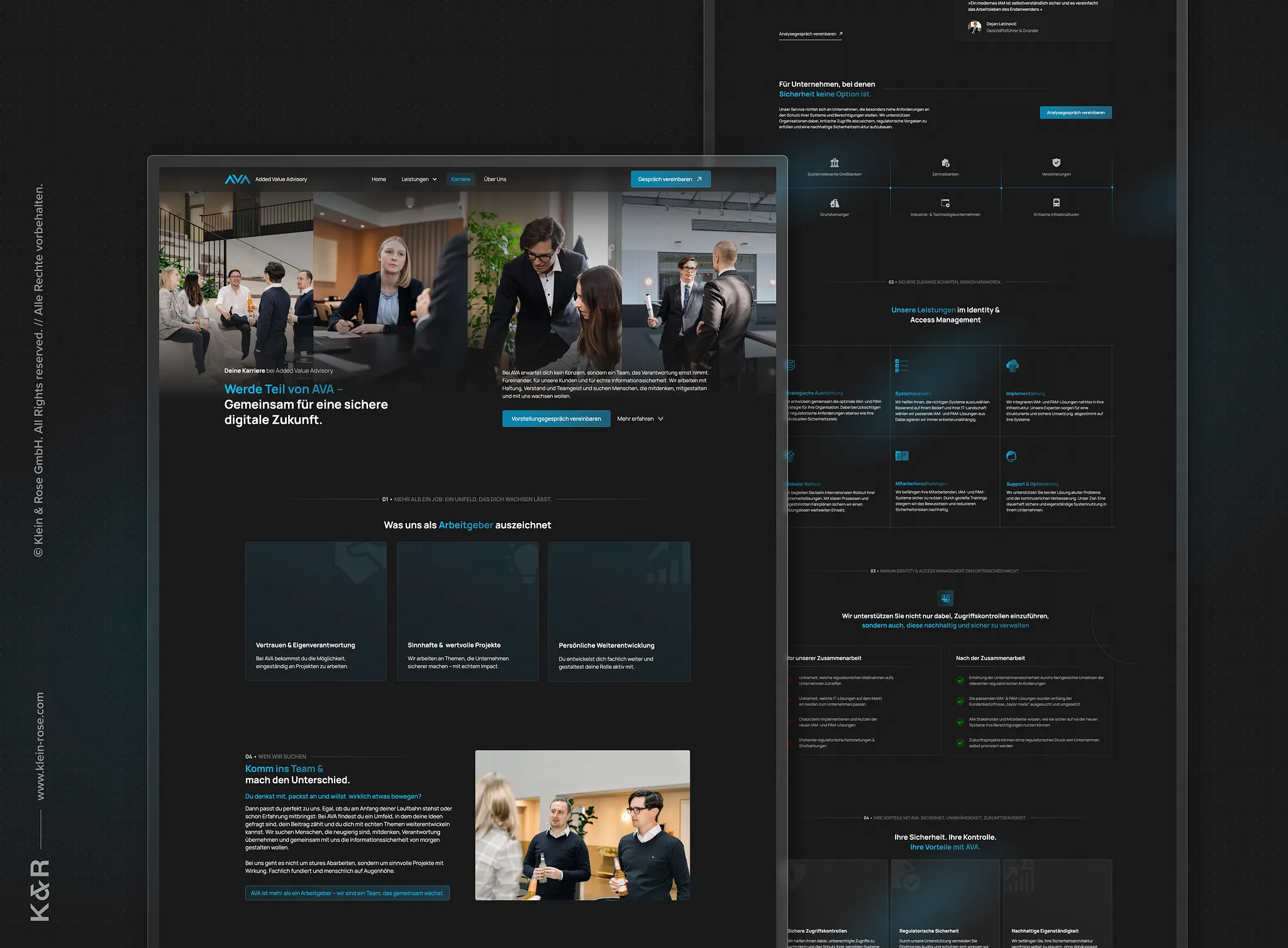
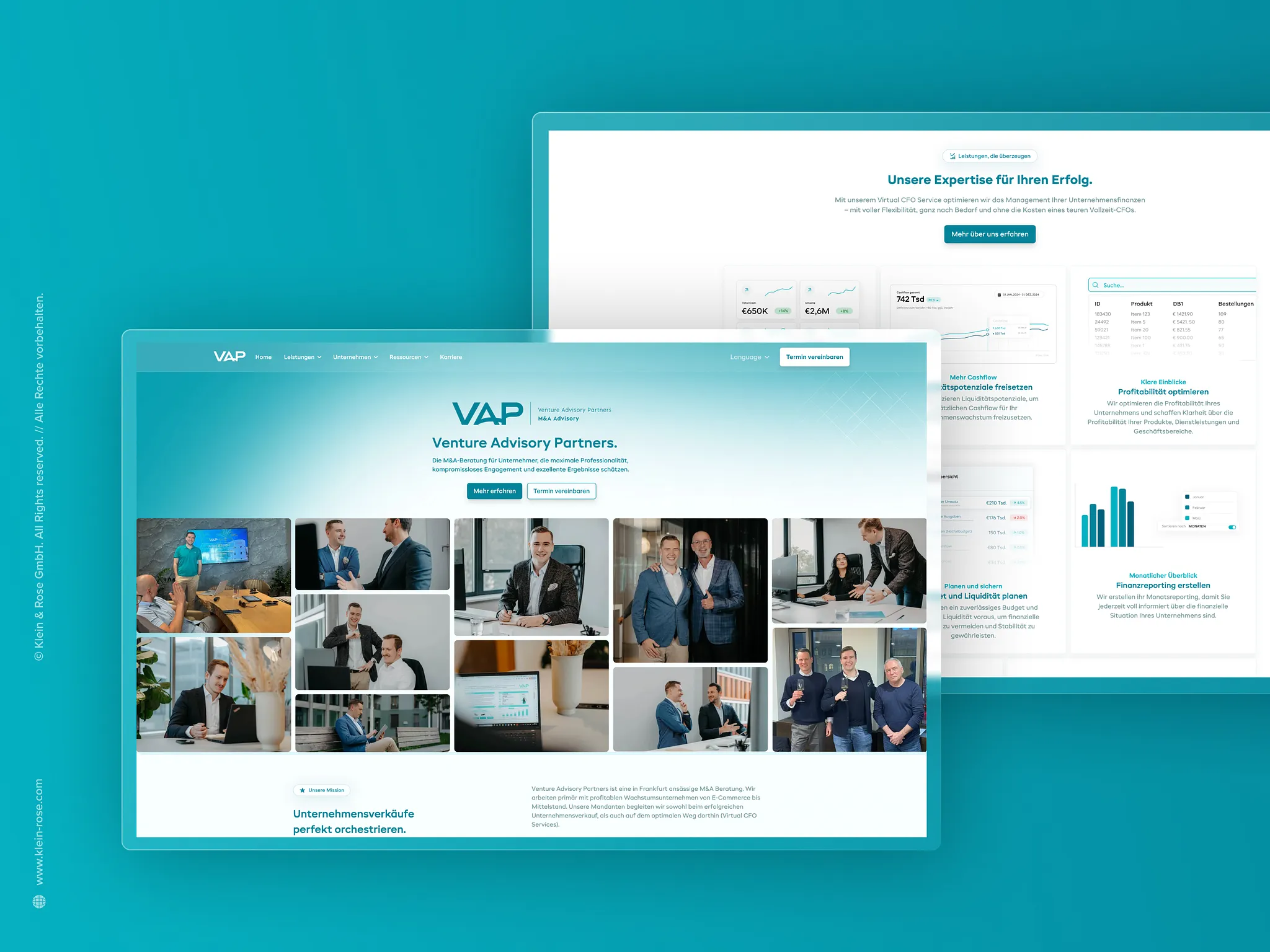
What this looks like in practice can be seen in our project with PrimeLog Real Estate. For the commercial real estate brokerage firm, we implemented not only brand identity, web design, and SEO, but also the complete business photography. The professional team and property images were a central component of the new brand presence. The result: increasing customer inquiries shortly after the relaunch and a noticeably strengthened market position. The managing director summed it up perfectly: “Now that we are in the market with a professional presence, we see every day just how much this investment is paying off.”
Fourth, professional images increase conversion. An About Us page with real team photos is clicked more often and viewed for longer than one with generic images. A LinkedIn profile with a professional headshot generates significantly more profile views. And a careers page with authentic insights into everyday work attracts more qualified applications. The images work for you 24 hours a day, seven days a week.
Having professional business photos is the first step. Using them strategically is the second. Many companies invest in a photoshoot and then use the results only on the website. In reality, the range of uses is much broader.
On your company website, photos are crucial in several places. The homepage needs a strong visual statement that immediately communicates who you are and what you do. The About Us page lives from real team and leadership photos. And the individual service pages benefit from images that show your work in action. Stock photos stand out immediately here and feel like a foreign element in an otherwise professional presence.
On LinkedIn and social media, professional images are a multiplier. A high-quality profile photo is the entry ticket to greater visibility. Then come team photos for posts, behind-the-scenes images, and event documentation. Companies that regularly post authentic images achieve significantly greater reach than those relying on text-only posts or stock material.
In recruiting and employer branding, real photos are now essential. Applicants research potential employers online, and the careers page is often the first touchpoint. If all they see there are stock photos of smiling people in open-plan offices that have nothing to do with reality, mistrust is created instead of enthusiasm. Authentic team photos, insights into everyday work, and real employee portraits make the difference. You can find more on the topic of employer branding in our Employer Branding Guide.
Last but not least, business photos also play a role in print materials, presentations, and pitch decks. Whether it is a company brochure, a trade fair stand, or an investor presentation, professional images enhance every format and ensure a consistent brand presence across all touchpoints. You can read the details on optimal preparation and the right outfits in our article How to Get Perfect Business Photos: Preparation, Outfit, and Tips from a Professional.
.webp)
The question “How much does a business photo cost?” is one of the most common ones we receive. And it cannot be answered in a blanket way, because the price range depends on several factors.
For a single business portrait with professional lighting, post-production, and several final images, you can roughly expect up to 500 euros. Team shoots, where several employees are photographed and group images as well as situational shots are created in addition, typically range between 1,500 and 5,000 euros, depending on the scope and number of people. Extensive brand shoots, which take place over half or a full day and provide material for website, social media, and print, start at around 2,000 euros and can be significantly higher for more complex setups.
What influences the price are above all the scope of the shoot, the number of final images, the amount of post-production, any location costs, and whether additional services such as styling or makeup are needed. The experience and specialization of the photographer also play a role.
Briefly explained: many photographers work with day rates or half-day rates. The price generally includes preparation, the shoot itself, and the professional post-production of an agreed number of images. Usage rights are another factor: clarify in advance whether you may use the images without restriction across all channels.
One point we emphasize from experience: cheap often becomes expensive. Anyone who saves money on the photoshoot and has to replace the results after six months pays twice. Professional business photography is an investment that pays off over years because the images are used again and again on the website, in social media, in presentations, and in recruiting. You can find a detailed overview of pricing models and typical cost factors in our article What Does Business Photography Cost? Prices, Factors, and What You Really Invest.
Not every photographer is automatically a good business photographer. Choosing the right partner has a decisive impact on the quality and usefulness of the results. What should you look for?
First, take a close look at the portfolio. Does it show work in a corporate context? Do the people look natural and authentic, or stiff and posed? Can you find examples that stylistically go in the direction you envision for your company? A photographer who takes excellent wedding photos is not automatically the right choice for a B2B team shoot.
Second, experience with companies is an important factor. Business photography requires an understanding of brand identity, target audiences, and the context in which the images will be used. An experienced business photographer asks the right questions: How is your company positioned? Which visual style fits your brand? Where will the photos be used? This coordination is crucial for results that not only look good, but also work strategically.
Third, you should clarify whether the photographer understands and takes your brand strategy and corporate design into account. Images created in isolation, without reference to your color palette, your tone of voice, and your positioning, can be photographed beautifully and still not fit.
And here we come to an aspect many companies underestimate: the greatest leverage arises when photography is not viewed in isolation, but as part of a holistic brand strategy. When branding, web design, copy, and photography come from one coherent source, they reinforce one another.
That is exactly the approach we followed for MH Gewerbe-Immobilien. Corporate design, web design, SEO, and the complete photo and video production came from one source. The result: an external presence in which every element works together. The managing director described the effect this way: “Conversations hardly revolve around fundamental trust anymore.” Photography was a major reason for that, because professional images of the team and the properties communicated competence and seriousness from the very first click.
The decision between a freelance photographer and an agency that offers photography services depends on your needs. If you only need portraits, a specialized photographer may be the right choice. But if photography is part of a larger project, such as a website relaunch or a repositioning, it is often more efficient and more effective to get everything from one source. That way, images are created that are tailored exactly to your brand.
You have decided to invest in professional business photography. What should you do next in concrete terms? The following five steps have proven effective in our project work.
Step 1: Define goals. Before contacting a photographer, clarify internally which images you need and what for. Do you need new portraits for the website? Team photos for the careers page? Material for social media? Or a complete image pool for all channels? The clearer your goals, the more precisely the shoot can be planned.
Step 2: Create a briefing. Collect reference images that you like. Define the visual direction: more classic and serious or modern and relaxed? Which color palette fits your corporate design? What mood should the images convey? A good briefing saves time on the day of the shoot and ensures that everyone involved has the same picture in mind.
Step 3: Preparation. Clarify the location. Will the shoot take place on your business premises, in a studio, or at an external location? Inform the employees in good time and give recommendations for suitable clothing. Make sure the rooms are tidy and prepared. You can find details on this in our article How to Get Perfect Business Photos.
Step 4: The shooting day. Allow enough time. Nothing harms image quality more than time pressure. A good photographer creates a relaxed atmosphere, gives clear instructions, and gets authentic expressions even from employees who are more camera-shy. Trust their experience and allow yourself to be guided.
Step 5: Post-production and use. After the shoot comes professional image editing. Discuss in advance how many final images you will receive and in which formats. Also plan how and where the images will be used: website, social media, careers page, print materials. A well-thought-out usage plan ensures that you get the maximum out of your investment.
Professional business photography is one of the most effective investments a company can make in its external presence. It builds trust before the first word is spoken. It creates differentiation where services are comparable. And it makes your brand tangible, across every channel and at every touchpoint.
Whether portraits, team photos, brand shoots, or event photography, what matters is that the images are strategically conceived and fit your brand identity. Having a professional business photo created does not mean booking a photographer and hoping for good results. It means understanding photography as an integral part of your brand communication.
Better branding = fewer objections = more trust = more revenue. Photography is a central lever in this equation. Because those who present themselves professionally are trusted to deliver professional work.
At K&R, we combine business photography with branding, web design, and SEO into a holistic brand presence. Because we know that images alone are not enough if they are not embedded in a clear strategy. And because, from over 60 projects, we know the difference it makes when everything works together.
We would be happy to advise you, without obligation and on equal footing. At K&R Advertising, we develop branding, web design, and business photography from a single source so that your external presence convinces before you need to say a single word.
.webp)




.webp)


