69 percent of Generation Z only want to work for employers who share their values. That was the result of a representative generational study. For mid-sized companies, this means: posting a job ad on StepStone is no longer enough. Companies that want to attract skilled professionals today need concrete employer branding measures that make visible what their company stands for as an employer.
But which measures actually deliver results? And how can you implement them without having a corporate-sized budget at your disposal? That is exactly what this article is about. We show you ten tried-and-tested employer branding measures that we have found to be especially effective in our work with mid-sized companies.
This article is written for HR decision-makers, managing directors, and marketing leaders who want to strengthen their employer brand with concrete measures. It is especially valuable if you have already understood that employer branding matters, but are still looking for the right roadmap for implementation. If you would first like to deepen the fundamentals, we recommend our comprehensive article: Employer Branding: The Complete Guide for Companies.
Before we talk about specific measures, one important note. Employer branding measures only unfold their full effect when they are built on a clear strategy. That means you first need an Employer Value Proposition, in other words a clear employer promise, before you start implementing individual actions.
You may know this situation: a company suddenly starts posting colorful team photos on Instagram, but there is not a single word on the website about its company culture. Or a corporate film is produced professionally, but after that the application process drags on for three weeks without any response. These kinds of breaks happen when measures are implemented without being tied to an overarching strategy.
The key is to first define your employer identity and then choose the right measures. Not every measure fits every company. A technology startup communicates differently from a tax consultancy. A manufacturing business in a rural area needs different channels than a consulting firm in Frankfurt. What matters is that all measures tell one consistent story and communicate the same image of your company.
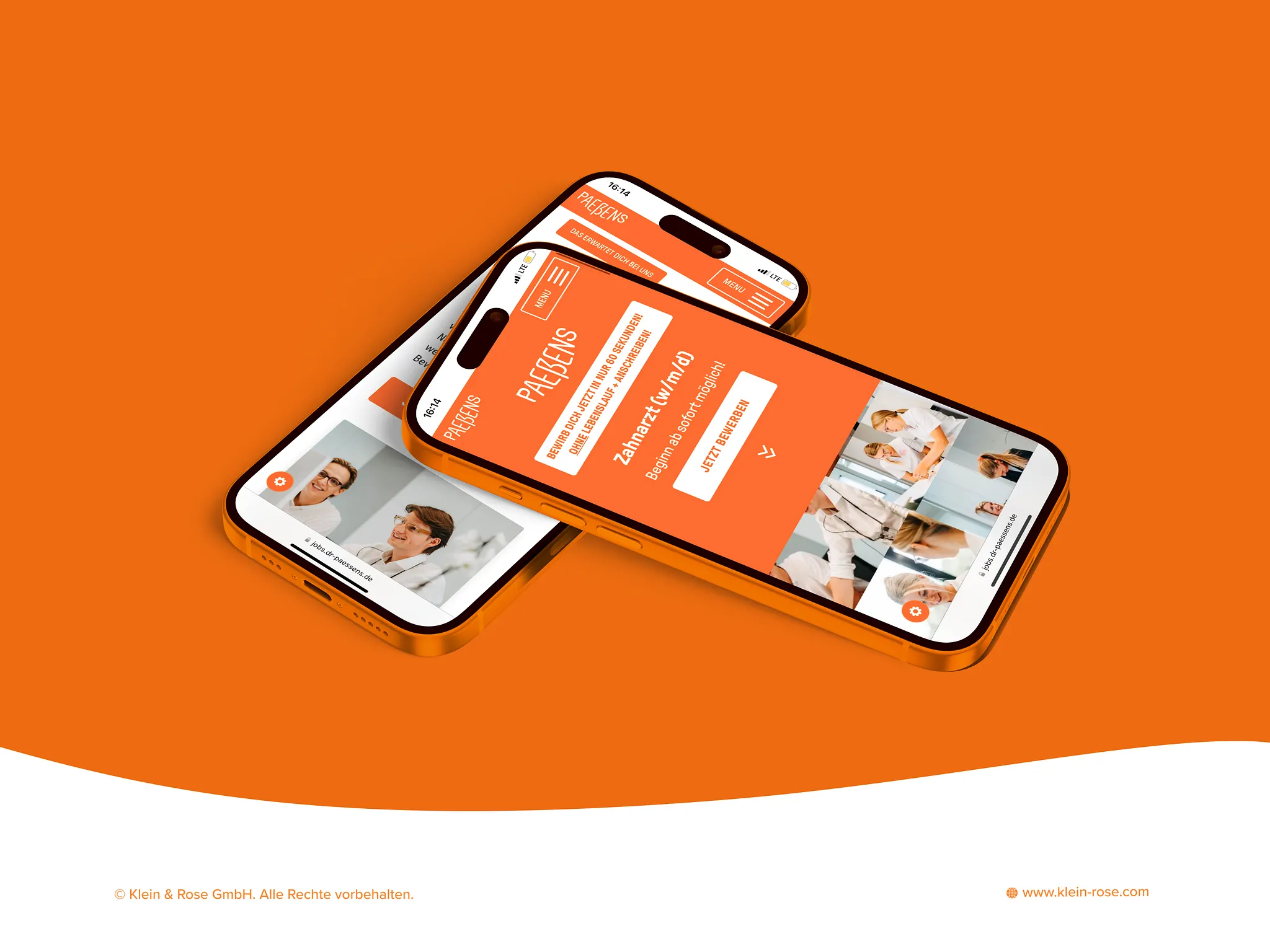
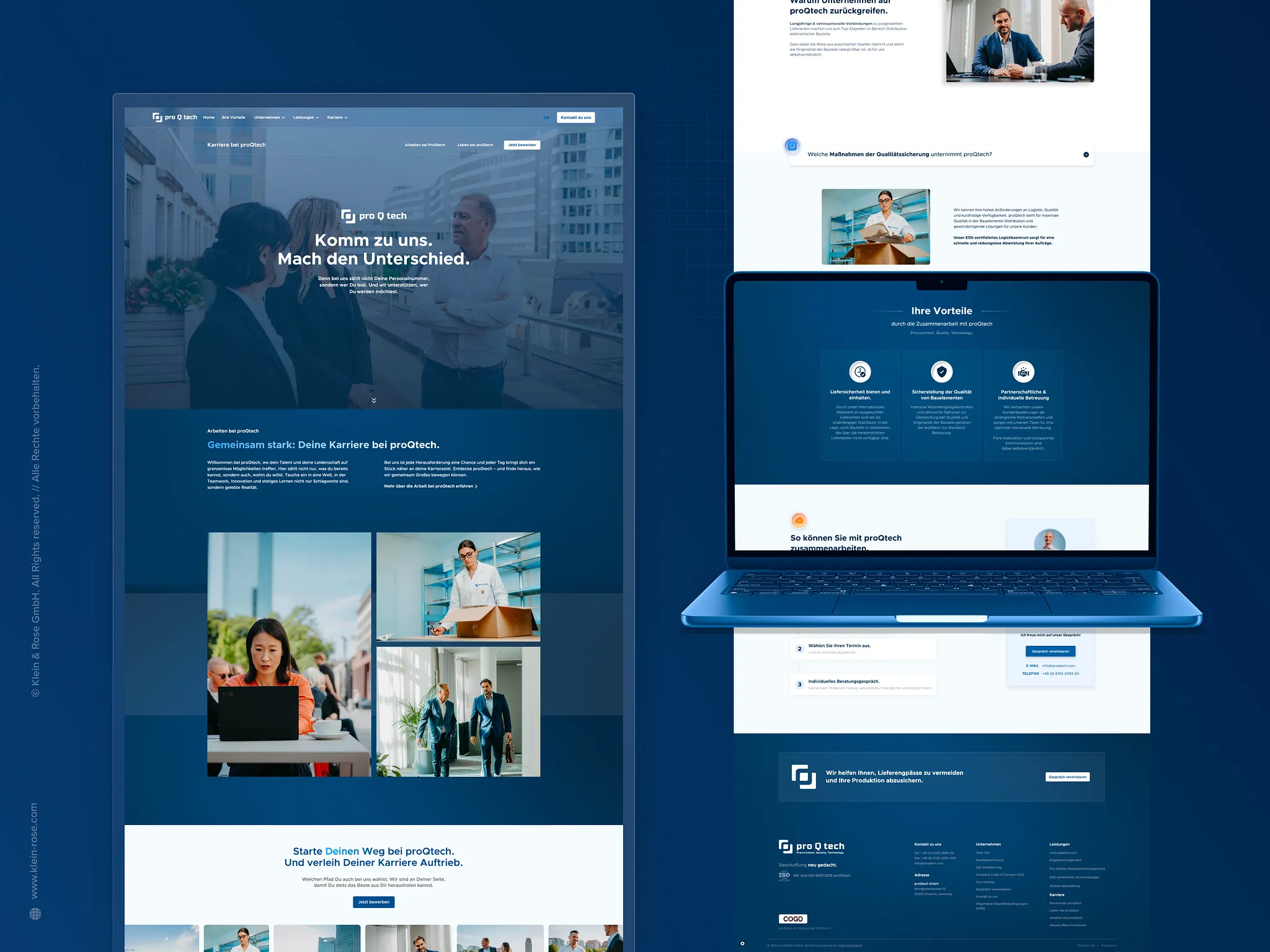
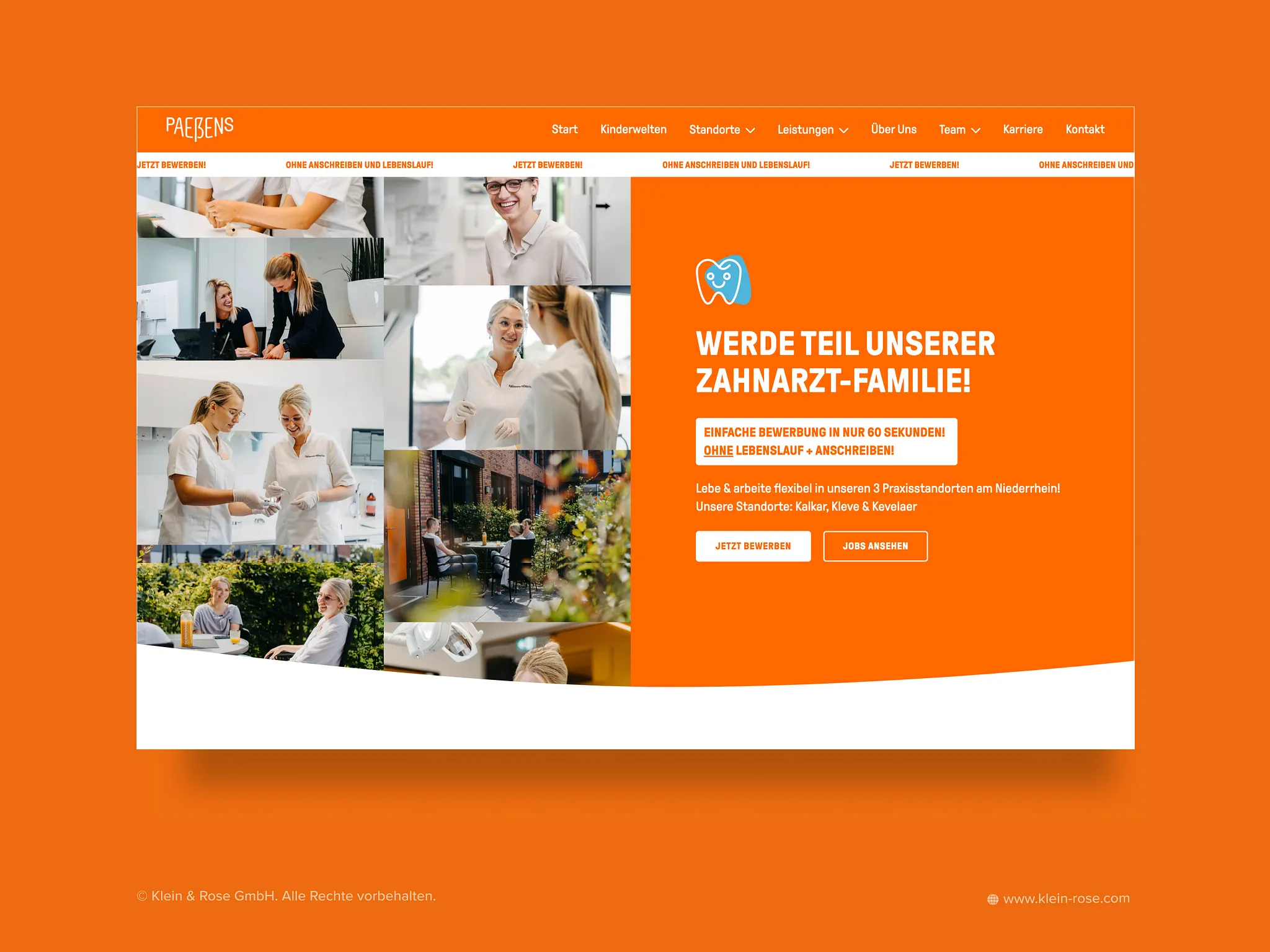
The careers page is the most important digital touchpoint for potential applicants. According to one study, 86 percent of all job seekers research reviews and information about a company before applying. In many cases, your careers page is the first place they visit after a search engine query or a job ad.
An effective careers page goes far beyond a list of open positions. It communicates a vivid picture of your company as an employer. This includes genuine insights into everyday work, employee voices, clear information about benefits and development opportunities, and a simple application process.
What distinguishes a careers page from a good website in general is this: it is not optimized for customers, but for talent. That affects the imagery, the tone of voice, and the entire user journey. Within just a few seconds, the applicant should be thinking: I could imagine working here.
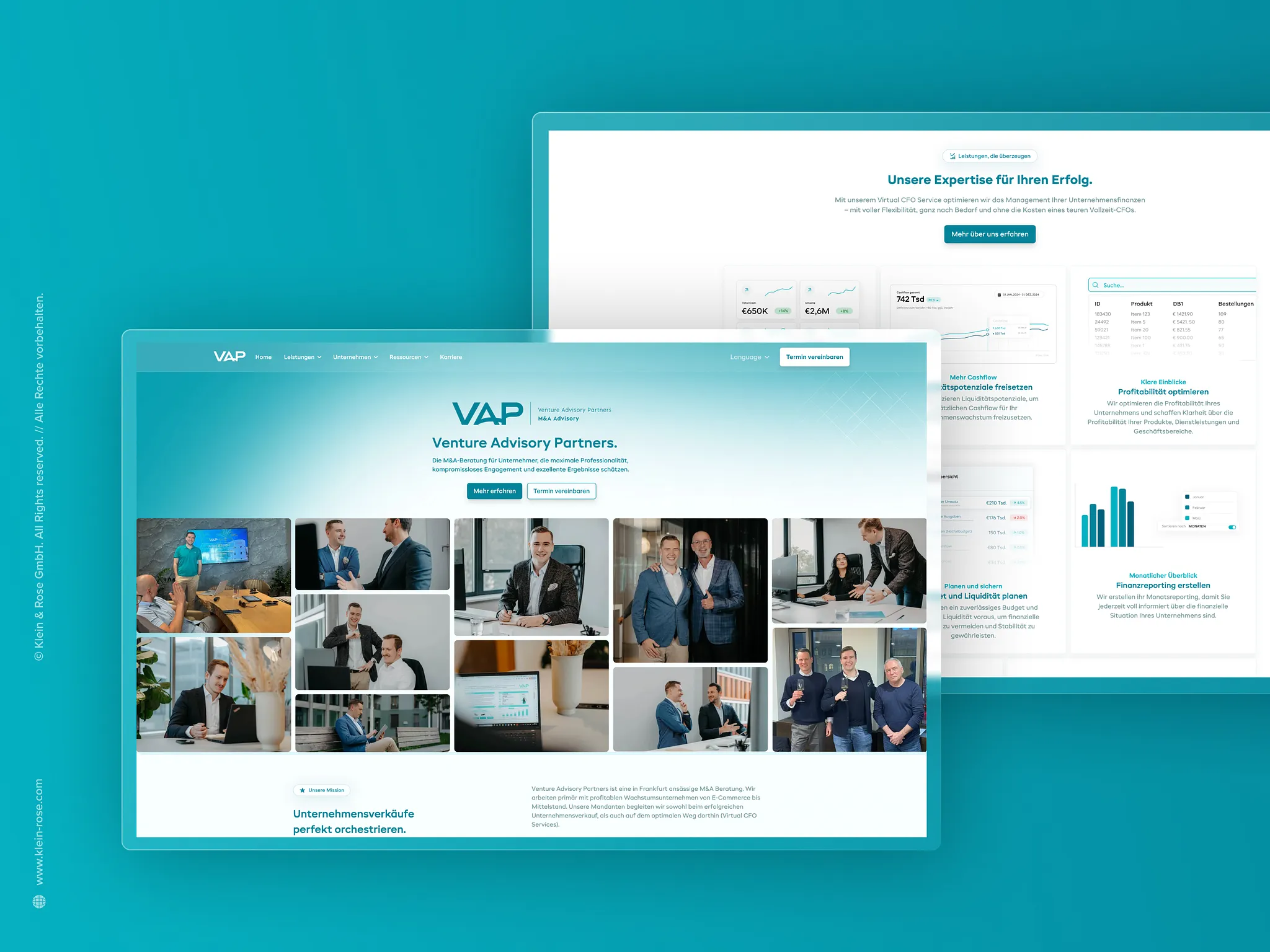
A concrete example from our agency work: for Steuerkanzlei Reuter, a second-generation tax consultancy, we developed not only the complete brand presence but also a dedicated careers portal. The firm faced the typical challenge of many service providers: professionally excellent, but barely visible online as an employer. With the new careers portal, the firm not only gained new clients, but also successfully filled open positions. For the first time, the professional online presence gave applicants the opportunity to perceive the firm as a modern employer.
Video is by far the most powerful format in employer branding. According to HubSpot, video posts on social media generate 48 percent more views than other formats. And the reason is simple: no other medium conveys company culture as directly as moving images. Showing what everyday work really looks like creates more trust in 60 seconds than ten job ads ever could.
This does not always mean expensive, high-gloss productions. On the contrary, authentic and approachable videos are often more effective than heavily staged promotional films. A short interview with a team member honestly explaining why they enjoy coming to work is often more convincing than any polished brand spot. What matters is the right balance between professionalism and approachability. Shaky phone videos create a poor impression, but an overly styled cinematic trailer can feel inauthentic. What you need is a professional eye for image, editing, and storytelling that captures the real company culture instead of staging it.
That is exactly one of our core strengths at K&R. From corporate films and employee interviews to social clips, we produce video formats designed specifically to support employer branding. Our approach is to develop video not in isolation, but as part of the overall brand presence, aligned with the careers page, social media strategy, and job ads. That creates a consistent image that works across every channel.
What has proven effective in practice: start with a set of three to five short videos. An authentic tour through the working environment, two or three employee portraits from different roles, and a message from management communicating values and vision. These formats can be used on the careers page, on LinkedIn, on Instagram, and directly within job ads, where they demonstrably generate higher engagement rates and significantly better reach.
The most credible voice in your employer branding does not belong to the marketing department. It belongs to your employees. According to LinkedIn, companies whose employees actively talk about their employer on social media are 58 percent more likely to attract top talent and 20 percent more likely to retain them.
This principle is known as employee advocacy. It works because personal posts from real people inspire more trust than corporate posts. On LinkedIn, for example, posts from employees achieve roughly twice the click-through rate of posts from company pages.
How to implement this in practice: encourage your employees to share their experiences. Offer support, such as social media training, ready-made content templates, or an internal editorial plan with suggested topics. Create an open communication culture in which employees feel comfortable speaking publicly about their employer. That only works if the internal reality is right.
Kununu or Google reviews are now for applicants what TripAdvisor is for travelers. Potential candidates go there to find out what it is really like to work for you. If you ignore these platforms, you leave your employer brand to chance.
Active review management does not mean suppressing negative reviews. It means responding to every review professionally and with appreciation, encouraging satisfied employees to leave authentic reviews, and using criticism as an impulse for improvement.
A worthwhile goal to aim for is a Kununu score of 4.0 or higher. Companies that reach this level are perceived much more positively by applicants and receive more qualified applications. A simple routine helps here: respond to new reviews within 48 hours. Thank people for positive feedback and take criticism seriously without becoming defensive.
More than half of HR decision-makers consider social media recruiting the most important trend in talent acquisition. That is what the Index Recruiting Report shows. And yet many companies post job ads on LinkedIn and Instagram in a random way, without any real content strategy behind them.
Effective social media recruiting follows a clear plan. Define which platform is relevant for which target audience. LinkedIn is excellent for specialists and managers, while Instagram reaches younger audiences visually. Create an editorial calendar that includes varied content: employee stories, team events, professional insights, company values, and from time to time specific job openings.
The most common mistake is that companies use social media only to post open roles. But nobody follows a company channel just to read job ads. People follow brands that tell interesting stories and offer insights they cannot get anywhere else.
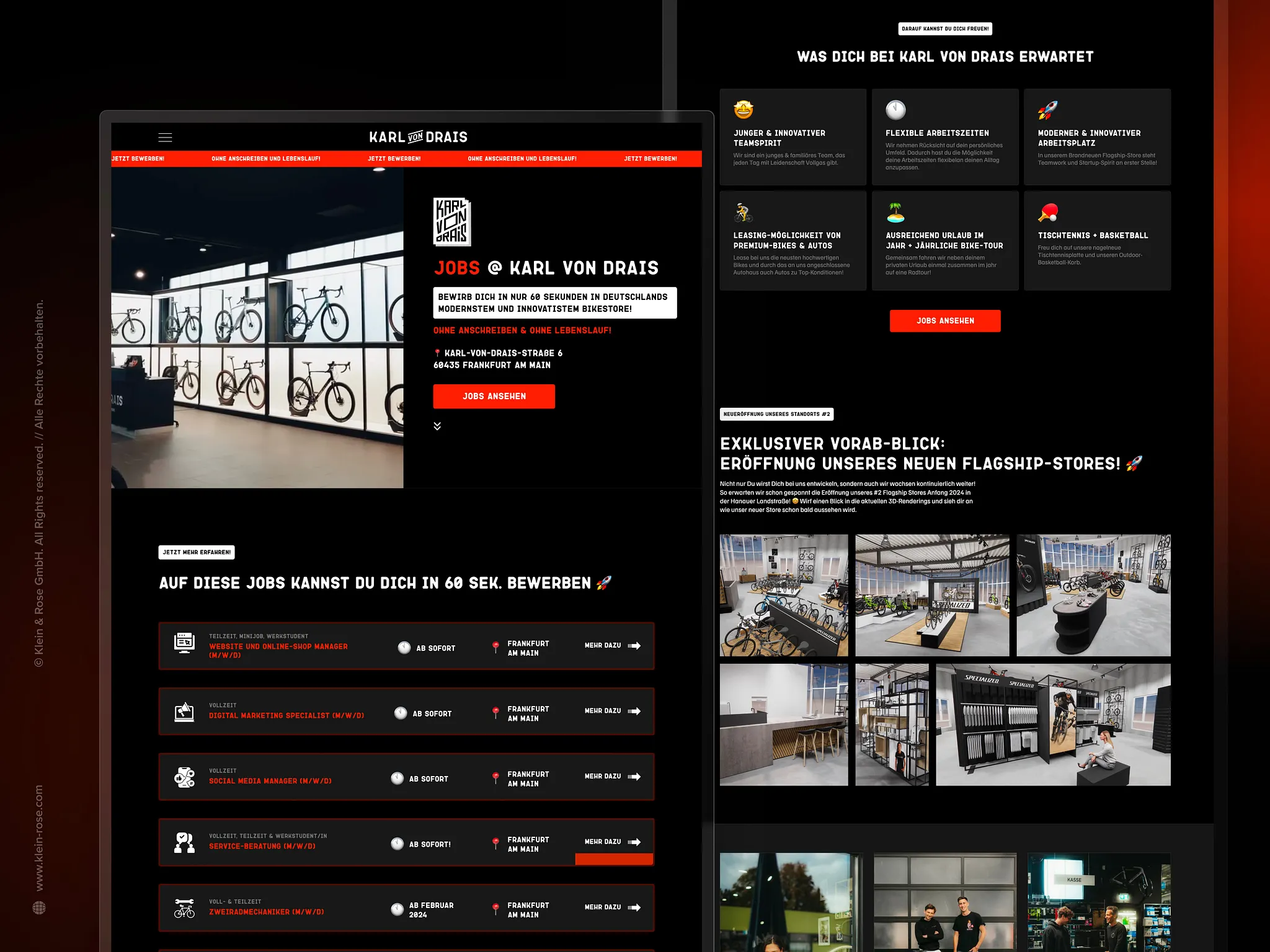
The first weeks in a new job determine whether an employee stays or mentally checks out again. A well-designed onboarding process is therefore one of the most effective internal employer branding measures. It shows new employees: we were expecting you, we are prepared, and you matter to us.
Good onboarding goes beyond introducing processes. It includes a structured plan for the first 90 days, personal welcome gestures, a buddy or mentor as a point of contact, regular feedback conversations, and the conscious integration of the new employee into the team. Every detail matters. A prepared workstation on the first day feels far more professional than a hectic search for a free desk.
Keep in mind: new employees talk about their experience in their personal circles and on review platforms. Outstanding onboarding generates positive word of mouth and strengthens your employer brand from the inside out.
According to the Index Recruiting Report, employee referrals are among the most successful recruiting channels. 39 percent of HR decision-makers name them as one of their most effective methods, on par with job ads on online job boards.
The reason is obvious: your employees know the company from the inside and only recommend people they believe will fit the team. As a result, the quality of applications is above average, onboarding time is shorter, and retention is stronger.
An effective referral program needs clear rules. Define for which positions referrals are encouraged, how the process works, and what reward is offered for a successful placement. The reward does not always have to be money. Extra vacation days, experiences, or non-cash rewards can be just as motivating. What matters is that the program is easy to use and that the referring employee receives prompt feedback.
Many companies offer attractive benefits, but barely talk about them. Flexible working hours, remote work options, training budgets, company pension plans, or mobility benefits are strong arguments in the competition for talent. But only if potential applicants hear about them.
According to the Randstad Employer Brand Research 2025, attractive salary, job security, and financial stability are at the top when people choose an employer. For highly qualified professionals, work-life balance and development opportunities are also especially relevant.
Make your benefits visible on the careers page, in job ads, and on social media. Avoid generic phrases such as “attractive compensation package” or “flat hierarchies.” Be specific: “30 days of vacation plus 5 flexible floating days,” “500 euros annual training budget per employee,” or “option to work remotely up to three days per week.” Specificity creates credibility.
A trend that is becoming even stronger in 2025 is this: managing directors and leaders who communicate regularly and authentically on LinkedIn have a measurable impact on their company’s employer branding. Candidates want to know who is leading the company and what those people stand for.
For mid-sized companies, this is a special advantage. Unlike large corporations, where leadership often remains anonymous, you can create closeness through personal communication. A managing director who speaks openly about company culture, challenges, and successes builds trust and makes the company tangible as an employer.
Start with one or two LinkedIn posts per week. Possible topics include insights into decision-making processes, learnings from day-to-day business, the introduction of new team members, or thoughts on industry topics. The tone should be personal and approachable, not promotional.
Every touchpoint in the application process is a moment of truth for your employer brand. From the job ad to the application form to the rejection email. A positive candidate experience does not only convince the applicant who gets hired, but also everyone who receives a rejection.
In practice, this means making the application process as smooth as possible. Mobile-optimized forms that can be completed in under five minutes. Automatic confirmation of receipt. Clear communication about the next steps and the timeline. Personal feedback, even in the case of rejections. Well-prepared interviewers during the interview.
Keep in mind that rejected applicants also talk about their experience within their network. Someone who is positively surprised during the application process will recommend the company, even if it did not work out. Someone who feels frustrated will share that as well, often publicly on review platforms.
Most companies first think of external visibility when it comes to employer branding measures: careers page, social media, job ads. That is understandable, because the effect on the outside is felt more quickly. But anyone who communicates only externally without creating the internal foundations is building on sand.
Internal employer branding measures aim to increase employee satisfaction and create a culture that employees are happy to recommend. These include regular employee surveys, transparent communication from management, training opportunities, recognition of strong performance, and an appreciative working environment.
The connection is simple: satisfied employees are the most credible ambassadors of your employer brand. They write positive reviews on Kununu, tell their network about their employer, and recommend qualified contacts for open positions. No image film and no social media campaign can replace that effect.
A company that promises team spirit and innovation externally, but internally suffers from rigid hierarchies and a lack of appreciation, will sooner or later notice this through rising turnover and declining reviews. According to the DIHK, employee retention measures are therefore the highest priority for 44 percent of HR decision-makers.
Ten measures sound like a lot. And in fact, it would be unrealistic to implement everything at once. Especially for mid-sized companies that often manage employer branding alongside day-to-day business, clear prioritization is essential.
Let us look at the sequence that has proven effective in practice. Start with the foundation: a professional careers page and a clearly formulated Employer Value Proposition. That is your base on which all further measures are built. In the second step, focus on visibility: social media presence, first video content, and active review management. In the third step, activate your own employees: referral programs, employee advocacy, and leadership communication.
For the start, we recommend a three-month pilot. Focus on three to four measures, review the first results after 90 days, and then decide which measures to scale and which to adjust.
There are also recurring patterns in the implementation of employer branding measures that often lead to failure. If you know them, you can avoid them.
The biggest trap is inconsistency. Employer branding measures work over the long term. Anyone who gives up after two months without visible results will never experience the effect that consistent brand building can create. Plan from the start with a time horizon of at least twelve months.
Another trap is the lack of involvement from management. Employer branding is not an HR topic alone. It affects the entire company leadership. Without the active support and visibility of management, many measures remain ineffective because they lack the necessary priority and resources.
Finally, many companies underestimate the effort required for internal implementation. 41 percent of companies lack the time and 35 percent lack the personnel for employer branding. Companies that cannot or do not want to build these resources internally should consider working with a specialized agency that supports the entire process, from strategy to implementation.
Let the numbers speak for themselves. A mid-sized company with 50 new hires per year and average recruiting costs of 6,000 euros per hire spends 300,000 euros on recruiting each year. If targeted employer branding measures reduce those costs by 30 percent, that means annual savings of 90,000 euros.
On top of that come the savings from reduced turnover. If the turnover rate drops from 15 to 12 percent and each resignation costs the company between 90 and 200 percent of annual salary, the total quickly adds up to six-figure amounts. According to Universum, companies that take a structured approach achieve returns of up to 3.3 times their investment.
Professional employer branding pays off in multiple ways. The measures we have presented in this article are not theory. They are the result of real project experience and reliable data. What matters is that you get started. Not with everything at once, but with the right priorities and the willingness to invest in your employer brand for the long term.
You now know which measures work. But where exactly is your greatest leverage? Let us find out together which employer branding measures will have the biggest impact for your company.
.webp)




.webp)


