“Conversations hardly revolve around basic trust anymore.” This sentence came from the managing director of a commercial real estate company for which we completely redeveloped the entire external presence: corporate design, website, SEO, photography, and video. What surprised him was that the effect was not only noticeable in sales. The quality of applications changed as well. Prospective candidates suddenly perceived the company as a professional, modern employer, even before the first conversation took place.
This experience highlights a point that is often overlooked in employer branding: your employer brand is not an isolated HR project. It is the result of your entire external presence. Website, brand design, photography, video, copy, SEO visibility, all of these shape the image that potential applicants have of your company. Companies that only work on individual components are leaving impact on the table. In this article, we show why employer branding only unfolds its full power when all elements work together.
This article is aimed at managing directors and decision-makers who do not view employer branding as a standalone HR project, but as part of their overall corporate communication. It is especially relevant if you already sense that your online presence does not match your actual quality as an employer, or if individual recruiting measures are not delivering the results you hoped for. For the strategic foundations, we recommend our pillar article: Employer Branding: The Complete Guide for Companies.
Why employer branding is more than just a careers page
Many companies equate employer branding with a careers page and a few job ads. That is understandable, because these elements are visible and can be implemented quickly. But they fall short.
Before an applicant ever visits your careers page, they have already formed an impression of your company. They have seen your website, perhaps your social media profiles, maybe a video or a press article. They have registered the visual quality of your presence, even if they do not perceive it consciously. 94 percent of all first impressions are based on visual design. Within 50 milliseconds, the brain decides whether a website feels professional or not. That impression transfers directly to how the company is perceived as an employer.
This means: your employer brand does not begin on the careers page. It begins everywhere someone comes into contact with your company for the first time. An outdated website, an unprofessional logo, or stock-photo-based imagery sends signals that no job ad in the world can compensate for. On the other hand, a modern, consistent brand presence communicates competence and professionalism, which has an immediate effect on how you are perceived as an employer.
That is exactly what makes employer branding a holistic task. It is not about one single tool, but about the interaction of all touchpoints where potential applicants encounter your company.
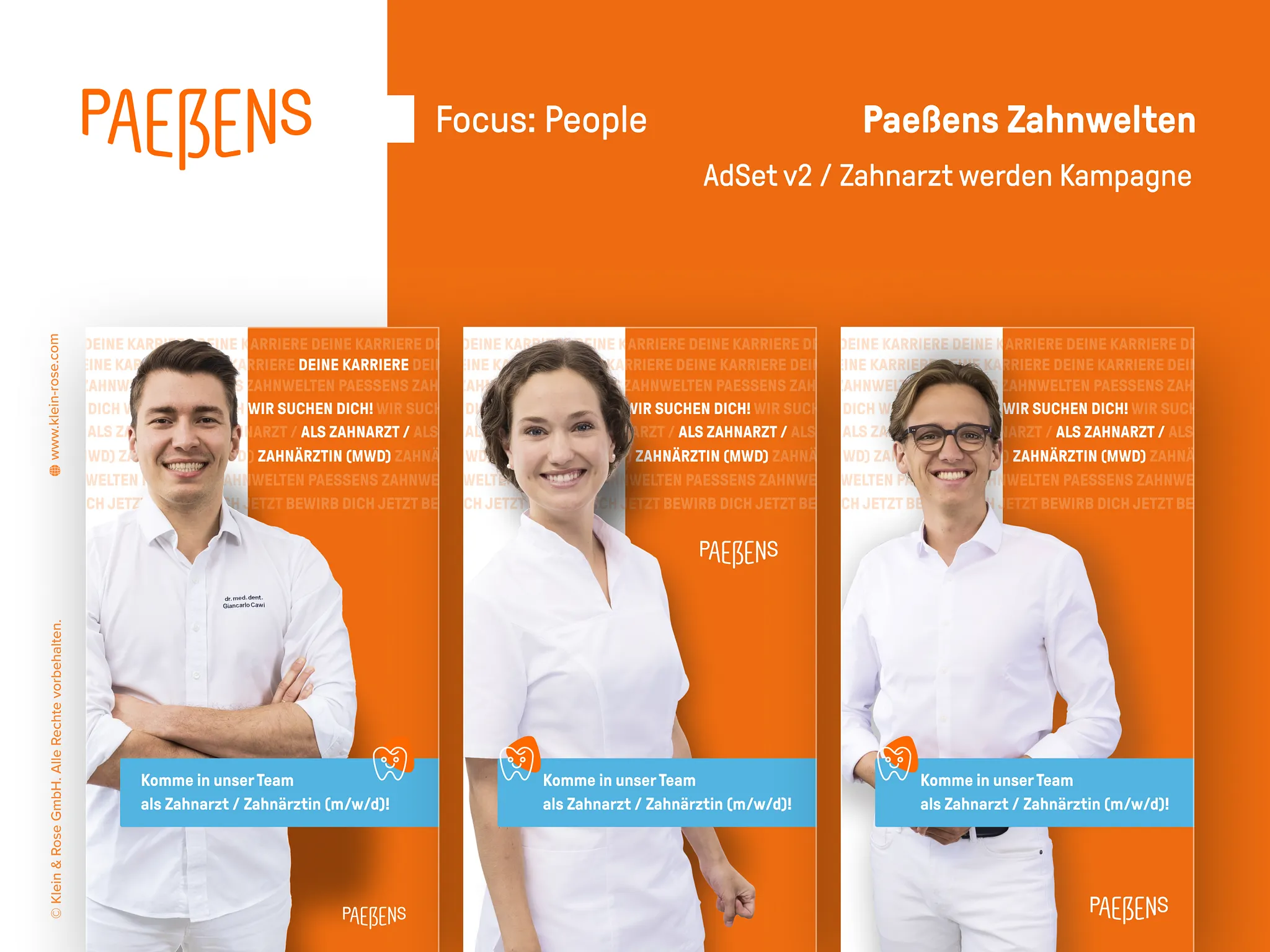
Professional employer branding rests on five pillars that reinforce one another. If one is missing, all the others lose impact.
Brand identity forms the foundation. Logo, color palette, typography, imagery, and tone of voice define how your company is perceived visually and verbally. For employer branding, it is crucial that this identity is not only aimed at customers, but also appeals to talent.
A corporate design that communicates credibility, innovation, and humanity creates a different impression on applicants than a technical, sober appearance without personality. Brand identity is the DNA of your entire external presence. Everything else is built on it.
In most cases, your website is the first digital contact a potential applicant has with your company. 75 percent of job seekers say that the careers website is their preferred source of information about an employer. Your website therefore must not only convince customers, but also function as an employer showcase.
That means a well-thought-out careers portal as part of a sales-psychology-optimized website. Not a tacked-on subpage with a list of vacancies, but an integrated section that combines company culture, team insights, benefits, and a simple application process. The careers page must be on the same visual and content level as the rest of the website, because applicants are just as demanding as potential customers.
Stock photos are the fastest way to destroy credibility. Applicants immediately recognize whether the images on a website show real employees or purchased models. Authentic team photos, professional portraits, and insights into the real working day create trust and approachability, two factors that make the difference in employer branding.
Professional business photography does not mean stiff studio shots. It means presenting real people in their real working environment in a way that makes them look professional and approachable at the same time. Good photos communicate company culture better than any text. They show applicants: this is what it really looks like here. These are the people you will be working with.
Video is the most powerful format for making company culture tangible. A brand film that communicates the company’s values and vision, employee interviews that provide honest insights, or short social clips for LinkedIn and Instagram: moving images create an emotional connection that no other medium can deliver with the same intensity.
What matters is the right balance between professionalism and authenticity. Shaky phone videos create a poor impression, but an overly styled cinematic trailer feels unconvincing. What is needed is a professional eye for image, editing, and storytelling that captures the real company culture rather than staging it. Videos should not be produced in isolation, but as part of the overall brand presence: visually aligned with the corporate design and linked in content with the website and careers page.
Even the most professional website is of little use if no one can find it. Search engine optimization ensures that your company becomes visible when potential applicants search for relevant terms. This applies not only to job ads, but to your entire online presence.
If someone searches on Google for “employer [your industry] [your region],” your company should appear. If someone googles your company name, they should see a professional website, positive reviews, and ideally content that shows your expertise and company culture. In employer branding, SEO is not a nice-to-have, but the prerequisite for all other measures to reach their target audience at all.
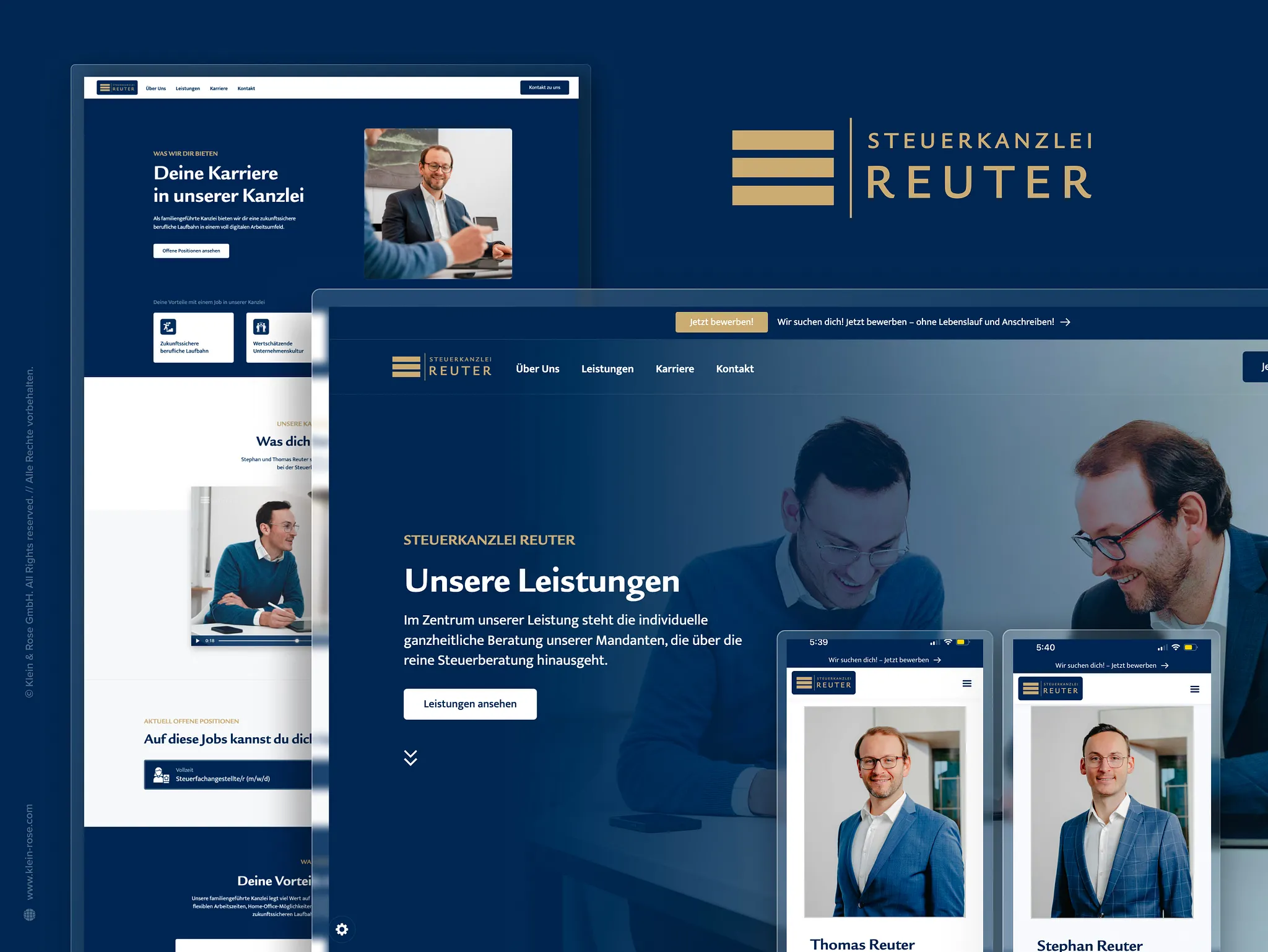
The effect of a holistic approach becomes clearest when you look at what happens when individual building blocks are missing.
A company with a modern corporate design and a beautiful website, but with stock photos and no video: applicants sense that something is off. The surface looks professional, but the human layer is missing. The result is clicks on the careers page, but few applications, because emotional trust is missing.
A company with authentic team photos and an honest image film, but an outdated website from a technical perspective: the content is convincing, but the platform on which it is presented does not feel current. Applicants ask themselves: if the company does not keep its own website up to date, what does that say about the working conditions?
A company with an excellent careers page, but no SEO strategy: the page is convincing in terms of both content and visuals, but it is not being found. It exists only for the few applicants who take the direct route to the website. The large majority of potential candidates who research employers through search engines are lost.
These scenarios show that the individual building blocks reinforce one another. If one is missing, it reduces the impact of all the others. Professional employer branding is therefore not a modular system where you simply pick out a few parts. It is an integrated system in which every element plays its role.
In our work with companies across many different industries, we keep seeing the same pattern: when the entire external presence is right, not only do customer relationships change. Conversations with applicants change as well.
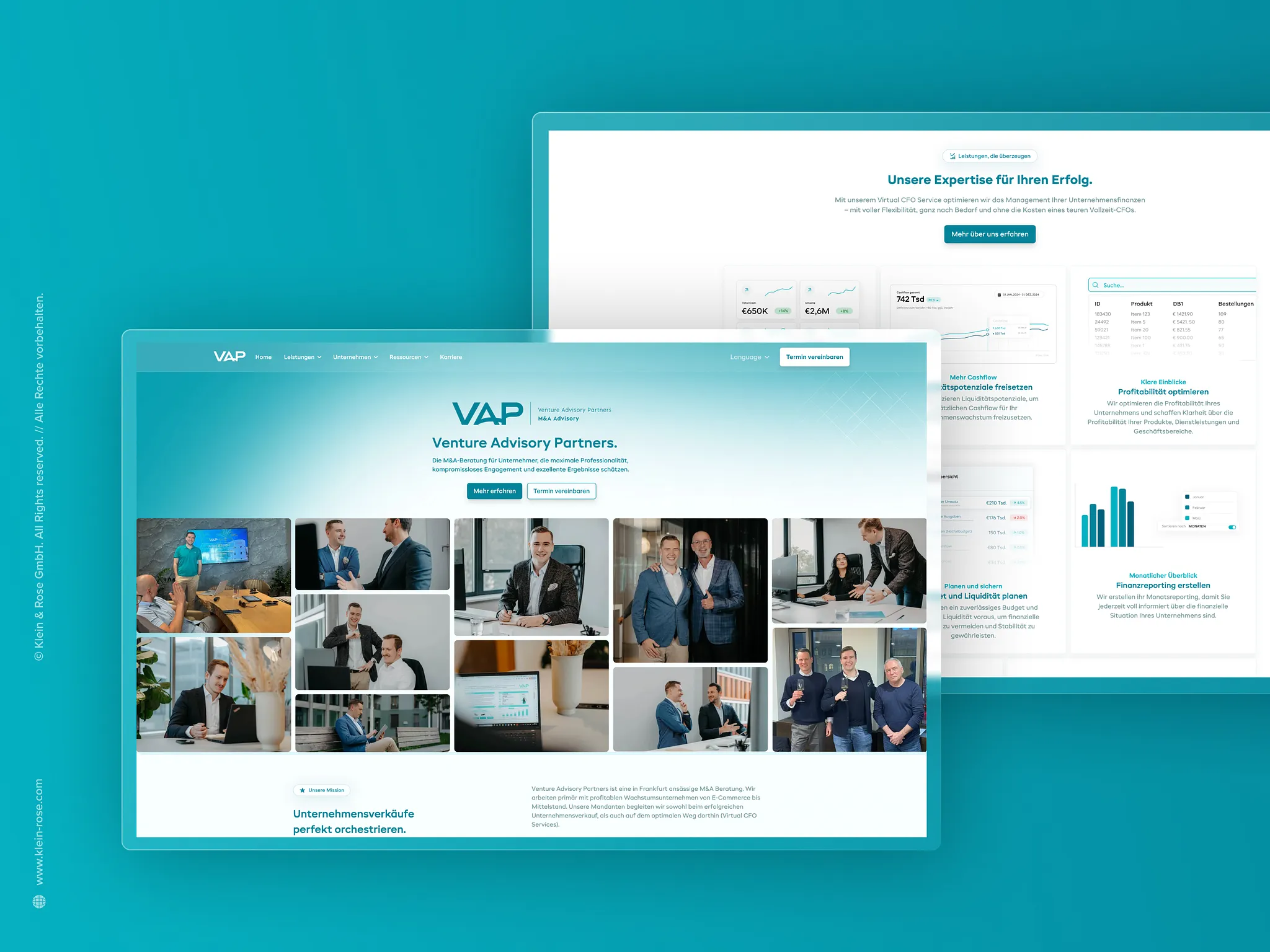
One concrete example: for PrimeLog Real Estate, a company in commercial real estate brokerage, we implemented brand identity, logo design, web design, SEO, and an image film as one connected project. The initial situation was typical for the mid-market: the company was professionally excellent, but its external presence did not reflect that quality. Just a few weeks after the relaunch, customer inquiries increased noticeably. But equally important, the company was perceived for the first time as a professional, modern employer. The managing director summed it up like this: “Now that we are in the market with a professional presence, we see every day just how much this investment is paying off.” This result did not come from a careers page alone. It came from the interaction of all the elements.
What these examples from our project work have in common is this: the effect on employer branding was often not even the primary project goal. The companies wanted to optimize their brand presence for customers. The fact that this also fundamentally changed how they were perceived as employers was a welcome added benefit that made the investment even more valuable.
Not every company needs external support for every measure. There are areas of employer branding that companies can handle well internally, and areas where professional execution makes a significant difference.
Measures that can often be handled well internally are those that require authenticity and personal closeness: motivating employees to leave reviews on Kununu, encouraging leaders to become active on LinkedIn, improving internal communication, testing and optimizing the application process from the candidate’s perspective, and conducting employee surveys. These measures require little budget, but they do require commitment and consistency.
Professional execution makes the decisive difference in everything that is perceived visually and technically: brand identity and corporate design, web design and careers portal, professional business photography, image film and employer branding videos, search engine optimization, and content strategy. Here, the quality of execution directly determines the effect. A self-designed logo, a template website, or amateur photography sends signals that undermine even the best employer branding strategy.
The real question is not “Do I need an employer branding agency?” The real question is: “At which points does professional execution create the greatest leverage for my employer brand?”
If you decide to have your employer branding implemented professionally, there are several criteria that determine success.
The most important factor is a holistic approach. An agency that only does web design cannot build a consistent employer brand. An agency that only produces videos delivers content without a strategic framework. What you need is a partner who understands branding, web design, photography, video, and SEO as an integrated system and can deliver them from a single source. Only then do you get a presence in which everything fits together and tells the same story.
A second factor is entrepreneurial thinking. Employer branding is not just a design task. It is about achieving measurable results: more qualified applications, shorter time to fill positions, lower turnover. A good agency does not think in pixels, but in business outcomes. It understands that a professional presence is not an end in itself, but a tool that works for the company.
Third: real project experience with measurable outcomes. References should not only show beautiful visuals, but should clearly demonstrate what the new presence changed for the company. More inquiries? Shorter sales cycles? Better applicant quality? Numbers and client feedback are more meaningful than a portfolio filled with pretty screenshots.
And finally: speed of execution. An employer branding project that drags on for twelve months loses momentum. Good agencies deliver a complete project, from the first briefing to go-live, in no more than three months. That is ambitious, but achievable if the processes are right and all disciplines work together under one roof.
The labor market is setting the direction: companies that invest today in a professional, holistic external presence are creating an advantage that will become increasingly difficult to catch up with in the years ahead. This is because demographic change will continue to intensify the competition for talent, and applicants will become ever more demanding when choosing their employer.
What is changing in the process is this: employer branding is no longer just an HR topic. It is increasingly merging with the company’s overall communication. The boundaries between customer acquisition and talent acquisition are becoming fluid. A company that promises professionalism and quality to its customers must also deliver on that promise to applicants, visually, digitally, and in terms of content.
Companies that now think of their brand presence as a holistic system, with branding, website, careers portal, photography, video, and SEO working together, are laying the foundation for an employer brand that not only convinces talent today, but works for the company in the long term. The question is no longer whether this investment is worth it. The question is how much longer you can afford to go without it.
Do you feel that your external presence does not reflect what your company actually offers as an employer? Let us take a look together at where the greatest leverage lies.
.webp)


.webp)


.webp)


