.webp)
A website relaunch is more than just a new design. The structure, content, technology and SEO foundations are usually renewed so that the website is clearly positioned again, converts better and remains stable or wins in Google. This requires a clear process, clean migration and a realistic budget.
The most important factors for a successful relaunch include clear goals, clean technical and content implementation as well as on-page and off-page optimization, including SEO migration. The aim is for your website to be better explained, convincing faster and to remain stable in Google or win. This requires a clear process, clean migration and a realistic budget.
This article is for you if you're currently at one of these points:
In this article, you will find answers to the most important questions about the website relaunch, such as the question of costs, technical details and best practices.
A website relaunch is the comprehensive renovation of an existing website. The central task of a website is to specifically address, inform and generate leads to the target group — it is therefore a company's central marketing and sales platform for its target group. In practice, these are usually four points at the same time:
Various areas such as technology, content and design are equally affected by the relaunch, which requires close coordination. A well-thought-out content strategy is essential to ensure that target groups are addressed and the relaunch is successful in the long term.
For a successful website relaunch, the necessary know-how should be available within the company itself or with external partners in order to optimally meet all technical, content and strategic requirements.
Important: Many say “we're just making a new design” and then realize that they need to move pages, change URLs, or restructure content. By then at the latest, it will be a relaunch, including SEO responsibility.
A redesign is usually an interface: layout, colors, typo, UI components. A design relaunch, also known as a website redesign, is a special type of website relaunch that focuses primarily on design and user experience.
A relaunch goes deeper: structure, content, technology and often SEO. There are various types of relaunches, which differ in scope and objectives — from pure design relaunches to complete technical or content revisions.
A simple rule of thumb: If you turn on navigation, templates, CMS or URLs, it is usually a relaunch and should be planned that way.
Many B2B companies relaunch their entire website every 3 to 5 years. Not because it is a rule, but because it has changed often enough during this time:
Regular measures to optimize the website are necessary in order to react to these changes and to continuously adapt the website to new requirements.
If you know these symptoms, a structured approach is worthwhile. In a free initial consultation, we can check whether an update is sufficient or whether a relaunch makes economic sense.
The honest answer: It depends less on design or development, but on content and approvals.
As a realistic guide for B2B websites:
What is often underestimated:
If you need to be fast, you can. But then you need clear accountability and tight planning.
Costs are best understood as a range based on scope and complexity. The total costs of a website relaunch consist of all relevant expenses such as design, development, content creation, hosting and other services.
Pricing depends largely on factors such as the selection of the content management system (CMS), the integration of third-party tools and the planned online marketing. Especially for larger websites or companies, the costs of a website relaunch can exceed 20,000€.
When calculating the costs for a website relaunch, all relevant aspects such as design, technology, content and SEO must be considered, as they work together and determine the overall effort. An important cost factor is also the orientation of the website to the needs of customers in order to specifically address potential customers and establish long-term customer relationships. For a complete relaunch, the costs are between 20,000€ and 40,000€.
A pure redesign can be cheaper as long as the structure, CMS and URLs remain the same. A website redesign is a form of website relaunch, which primarily involves reworking and modernizing the design of the website. As soon as content is rebuilt or pages are moved, migration and QA costs arise. Then it's a quick relaunch in terms of price and organization.
If you want a reliable cost range, instead of gut feeling, we can transparently calculate your relaunch based on page size, templates, content costs and SEO risk.
Many relaunches fail not because of skill, but because of a lack of process. Here are step-by-step instructions, which go through cleanly and which you can explain well internally.
What should the website be able to do better after the relaunch? Leads, applications, trust, visibility and in any case: win customers. A clearly structured table of contents as a project structure helps to clearly plan and coordinate all tasks and responsibilities.
The preparation of a detailed project plan is a decisive success factor for the successful implementation of the website relaunch. In addition: Who decides who delivers content, who finally approves.
This is where clarity is created. An honest look at the current website situation is crucial to make well-founded decisions for the website relaunch. The audit should therefore take into account all relevant SEO factors, i.e. on-page, off-page and technical aspects of search engine optimization. The aim is for your most important content to be included in search engines Stay visible and don't lose performance after the relaunch.
SEO tools and the Google Search Console help with the analysis. This allows you to see which pages are currently ranking, which search queries are working and where there are already technical warning signs. It is particularly important to look at the performance of your most important pages so that you can avoid ranking losses and correctly set priorities during the relaunch.
What is important in an audit:
A comprehensive SEO audit before the relaunch helps to identify potential problems early on that could affect the ranking. It is crucial that SEO measures Don't just happen at the end, but be integrated into the relaunch process from the start, from page structure to content migration.
After launch, monitoring is mandatory: With SEO tools and the Google Search Console, you can check whether crawling, indexing, rankings and traffic remain stable. This allows you to identify deviations at an early stage and to be able to SEO measures Resharpen immediately before major losses occur.
A well-thought-out concept for the website relaunch lays the foundation for long-term success and goal achievement. A search engine-friendly and clear URL structure is essential for SEO and optimal user guidance.
The development of a comprehensive content strategy is a central part of the concept in order to address target groups and customer needs in a targeted manner.
In the concept, various areas such as web design, technology and content must be considered in order to successfully implement a holistic relaunch project. A modern web design and a positive user experience (UX) are crucial to convince visitors and avoid confusion.
Digital knowledge and external support from experienced partners are often essential for the design phase. The most important measures include the optimization of the site structure, the integration of marketing and online marketing strategies, and continuous content optimization.
In the concept phase, you determine how the new website works and how users and search engines will find their way around it. It is crucial that structure, content and SEO logic fit together.
Design is not decoration. It is reading, trust and clarity. A well-thought-out web design and a targeted design relaunch are crucial to sustainably improve the user experience and ensure the long-term success of a website relaunch.
The conversion rate serves as a central target for measuring the effectiveness of UX and design optimizations. Important measures to increase UX and performance include optimizing page load times, improving mobile presentation, and continuous analysis and adaptation of the website.
Mobile optimization (responsive design) and fast loading times are essential for a positive experience for customers and contribute significantly to the success of the relaunch. When optimizing UX, various areas such as design, technology and content must be considered equally in order to achieve a holistically convincing result.
A central element in the technical implementation of a website relaunch is the content management system, which forms the basis for efficient administration and updating of content.
The implementation comprises various areas that are closely interlinked. The most important measures include optimizing performance, setting up forms, integrating third-party systems and careful content migration to ensure the long-term success of the website.
Comprehensive know-how and, where appropriate, external support in the technical and content areas are crucial for successful implementation. The website acts as a central platform for corporate communication and should be strategically oriented accordingly. The technical implementation and testing are carried out in a closed staging environment to rule out errors before going live.
This is where the difference between “running” and “ranking slump” happens.
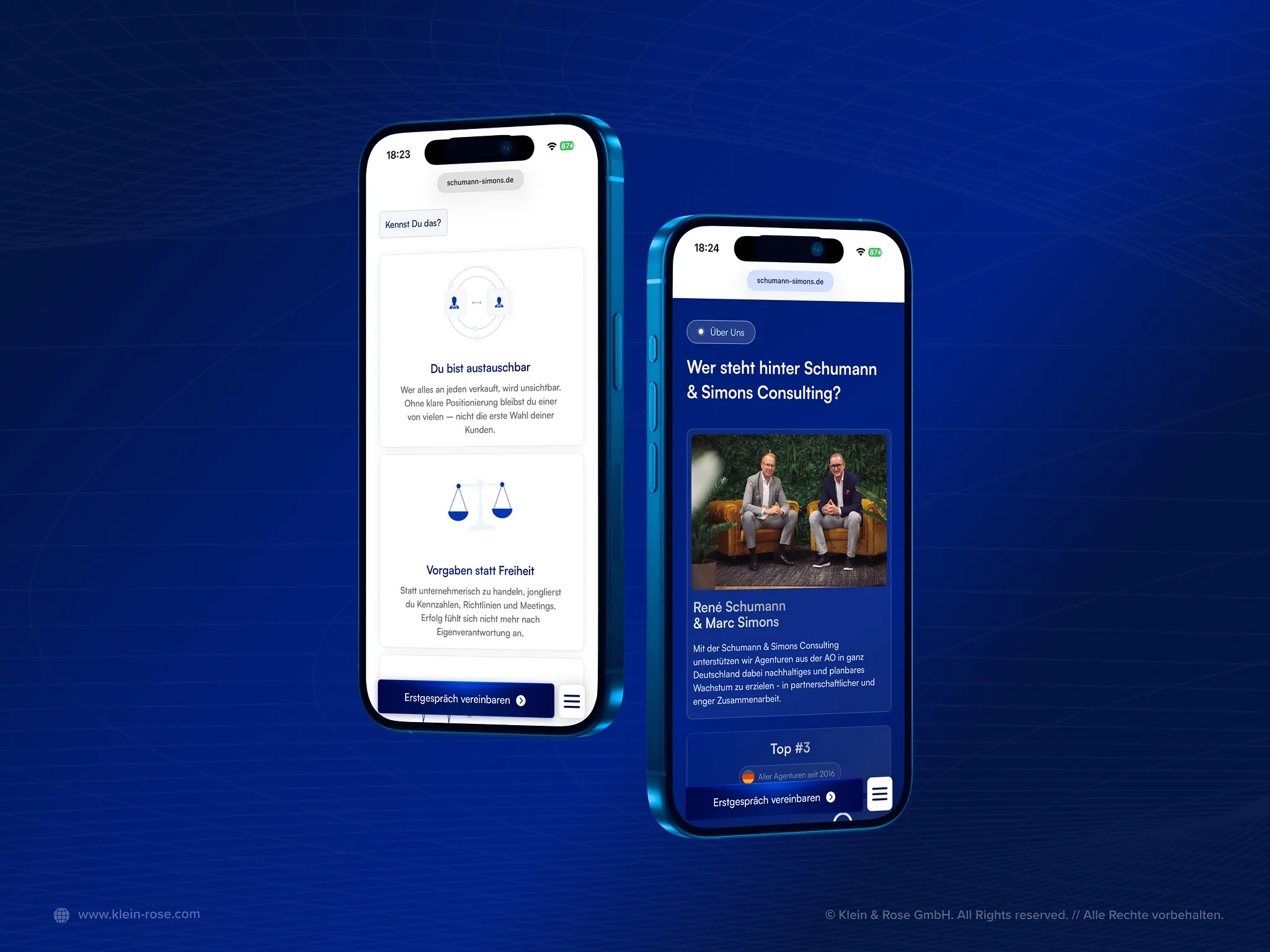
The most common relaunch fear is justified: Many websites lose visibility after the relaunch because signals are lost. We'll show you what the most common mistakes are and how to avoid them.
If you only take one thing away from this post, it's our checklist. This checklist prevents most relaunch errors and problems.
If you need a simple project plan internally that is understandable, use this order:
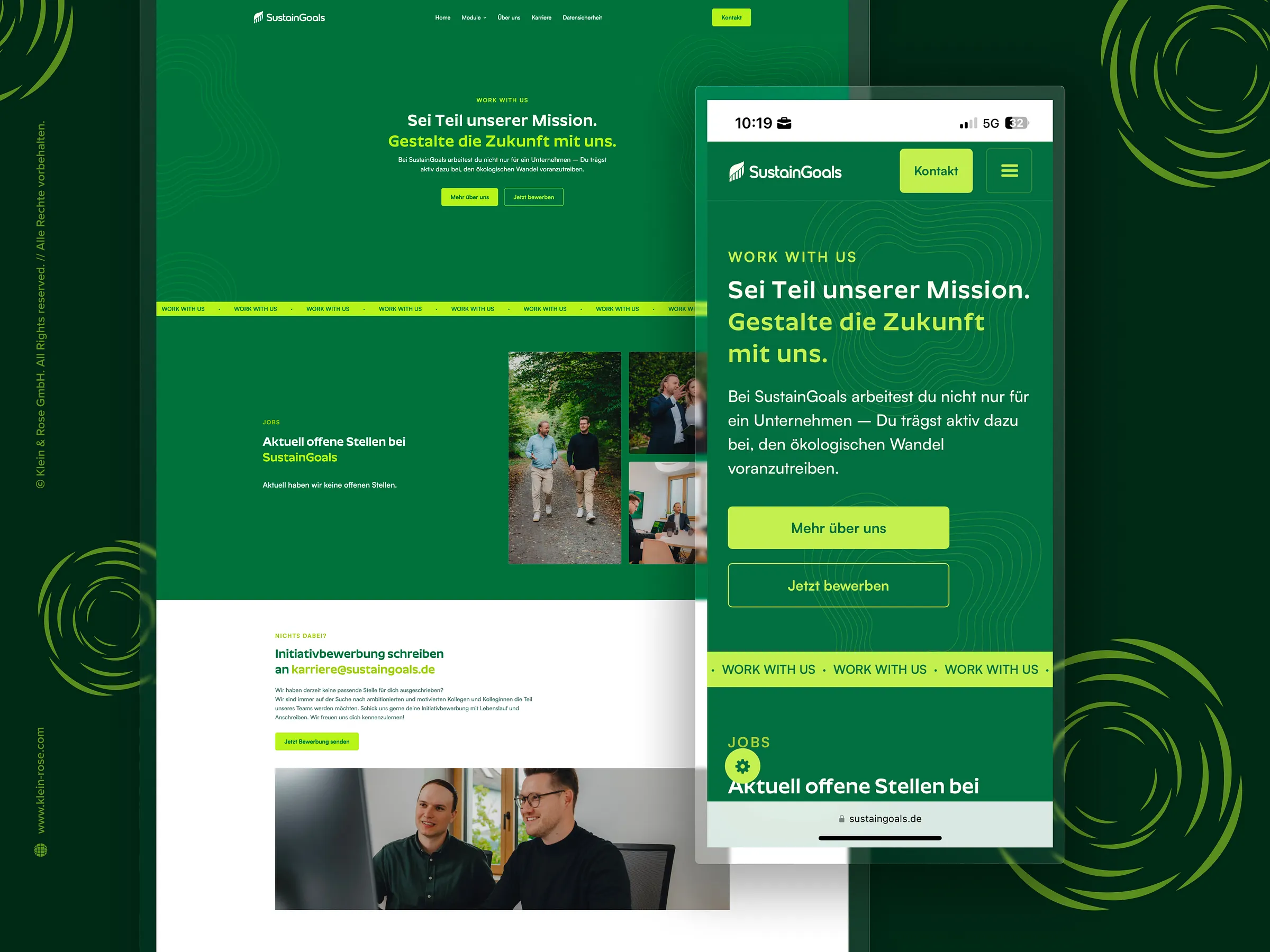
Concept is thinking, relaunch is implementation. If the design is weak, the new website often still looks like the old one, only with a new look. When the concept is strong, it creates clear pages, clear messages, and a structure that users and Google understand.
AI is a good accelerator when relaunched if you use it in a targeted manner.
Useful use cases:
What doesn't replace AI:
Freelancers work well when you have strong internal control and the setup is manageable. A website relaunch agency is particularly useful when several disciplines come together and you want clear responsibility, especially when it comes to SEO migration and launch risk.
A website relaunch should also always be implemented together with experienced web developers, web designers and SEO consultants or an agency so that technology, design and search engine optimization work together cleanly.
A website relaunch is successful when it creates three things at the same time: clarity for your target group, better user guidance and a technically clean basis including SEO migration.
A relaunch can also be useful if basic SEO measures cannot be implemented on the old website, for example due to technical restrictions in the CMS or lack of flexibility in templates and structure.
Conversely, a relaunch is often unnecessary if only minor adjustments are required, such as new content, individual new pages or pure design adjustments. If you treat the relaunch like a structured project, it becomes a growth step instead of a risk.
If you want to professionally plan and implement your website relaunch, Talk to us. We are your solution agency for strategy, UX, design, development, SEO migration and implementation.


.webp)